
 Translate
Renton Area Mobility Project
Metro is exploring changes to bus routes and stops in the Renton area. This project supports the City of Renton's ongoing changes to its downtown and will focus on connecting Metro service to the future Renton Transit Center, located near the South Renton Park-and-Ride.
Opening in 2028, the new transit center will connect Metro bus routes and Metro Flex services with the future RapidRide I line and Sound Transit’s Stride S1 Bus Rapid Transit (BRT) line, creating a main regional transit hub with connections between Burien, Renton, Bellevue and beyond.
Project Overview
For the Renton Area Mobility Project, Metro will redesign transit services for passengers in downtown Renton. The future Renton Transit Center, with a new, nearby location planned for the corner of South Grady Way and Rainier South, is being developed through a partnership between Metro and Sound Transit.
Metro is working closely with the City of Renton to develop new bus routes and stop locations that support a transition to the future transit center. Maintaining access to downtown businesses, services, neighborhoods and community destinations is still a priority.
Major Metro and Sound Transit service will include:
- Metro bus routes and Metro Flex vehicles, allowing for easier transfers to the Renton downtown business district
- the future RapidRide I line, for fast and easy connections to Renton, Kent and Auburn
- Stride S1 Bus Rapid Transit (BRT) line, providing connections between Burien, Renton and Bellevue
When the future Renton Transit Center opens, the bus stops at the South Renton Park-and-Ride will close. However, parking there will remain.
To line up with the opening of the new transit center and the Stride S1 line, Metro is redesigning new transit service in fall 2028, pending King County Council approval.
Project routes
Changes will primarily focus on pathway changes in and around downtown Renton to move to the future facility. The following bus and Metro Flex services are under consideration for changes:
- Bus routes: 101, 102, 105, 106, 107, 143, 148, 153, 240, 907, RapidRide F Line, future RapidRide I Line (currently Route 160)
- Metro Flex: Skyway and Renton Highlands
Please note: Route 143 was suspended during Metro's pandemic response and is not currently operating.
Metro considers several factors when planning bus service changes, including:
-
How people use transit
Ridership data and travel patterns -
Where transit is needed
Gaps in service and the needs of current and potential riders -
What the community says
Feedback from riders, residents, businesses and community organizations.
-
Connect to new regional transit
Provide connections to new services, including Sound Transit’s Stride bus rapid transit (BRT) -
Prepare for the future Renton Transit Center
Move bus service to the new transit center when the current center closes -
Minimize changes for riders
Maintain current service levels and keep east-west bus service in downtown Renton. -
Support RapidRide
Support the RapidRide F Line and the future RapidRide I Line (currently Route 160) -
Engage the community
Make sure current and potential riders are informed, included and able to provide input.
How transit service may change
The future Renton Transit Center will be farther south than the current transit center. Moving service to the new location means some bus routes will need to change their paths.
The Renton Area Mobility Project is designed to connect buses to the future transit center and Sound Transit’s Stride bus rapid transit while avoiding or minimizing reductions in service. Most routes will use more direct paths to and from the new transit center. As a result, fewer routes will directly serve some parts of downtown Renton.
Transit network highlights
Connections
All bus services in downtown Renton will connect at the future Renton Transit Center. Riders will also have connections along:
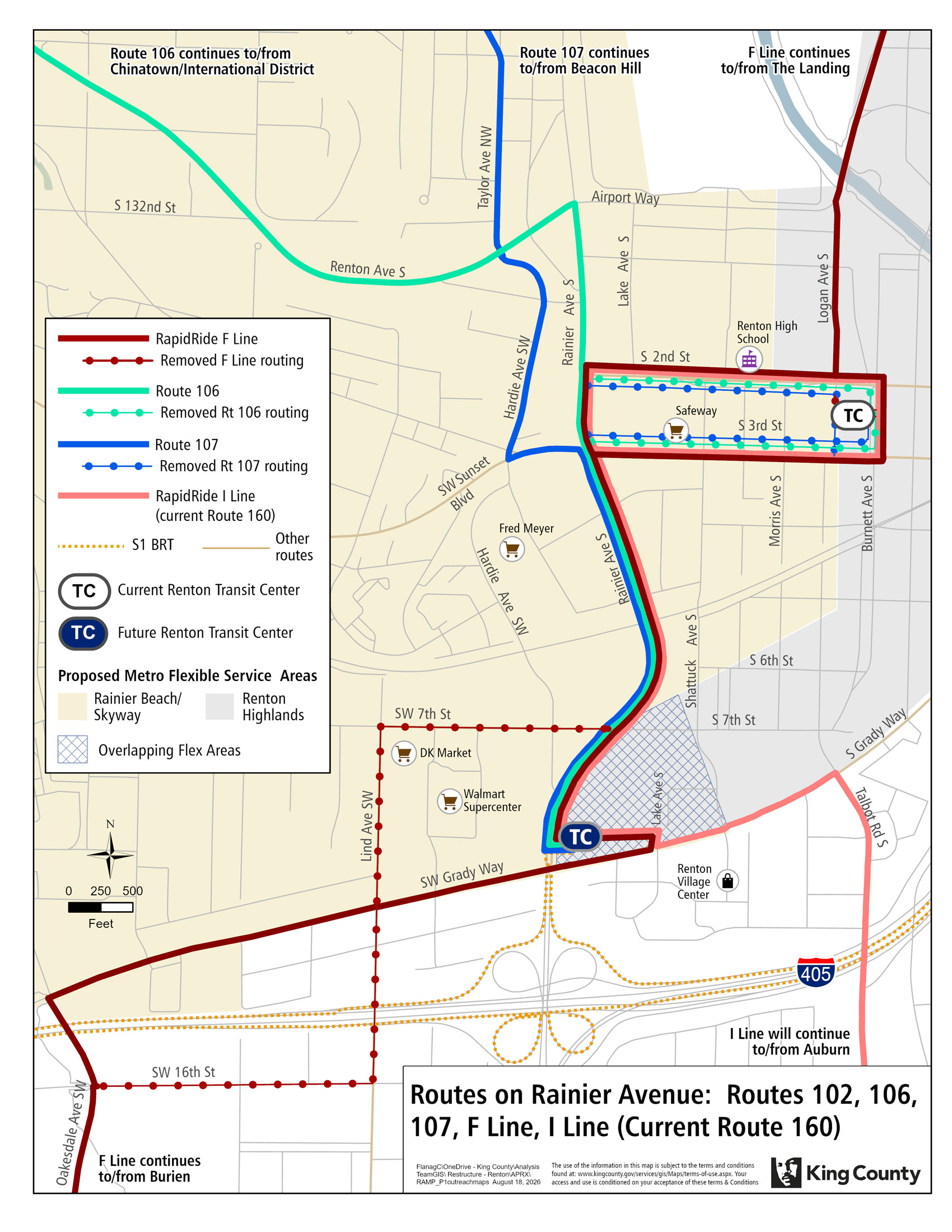
- Rainier Avenue
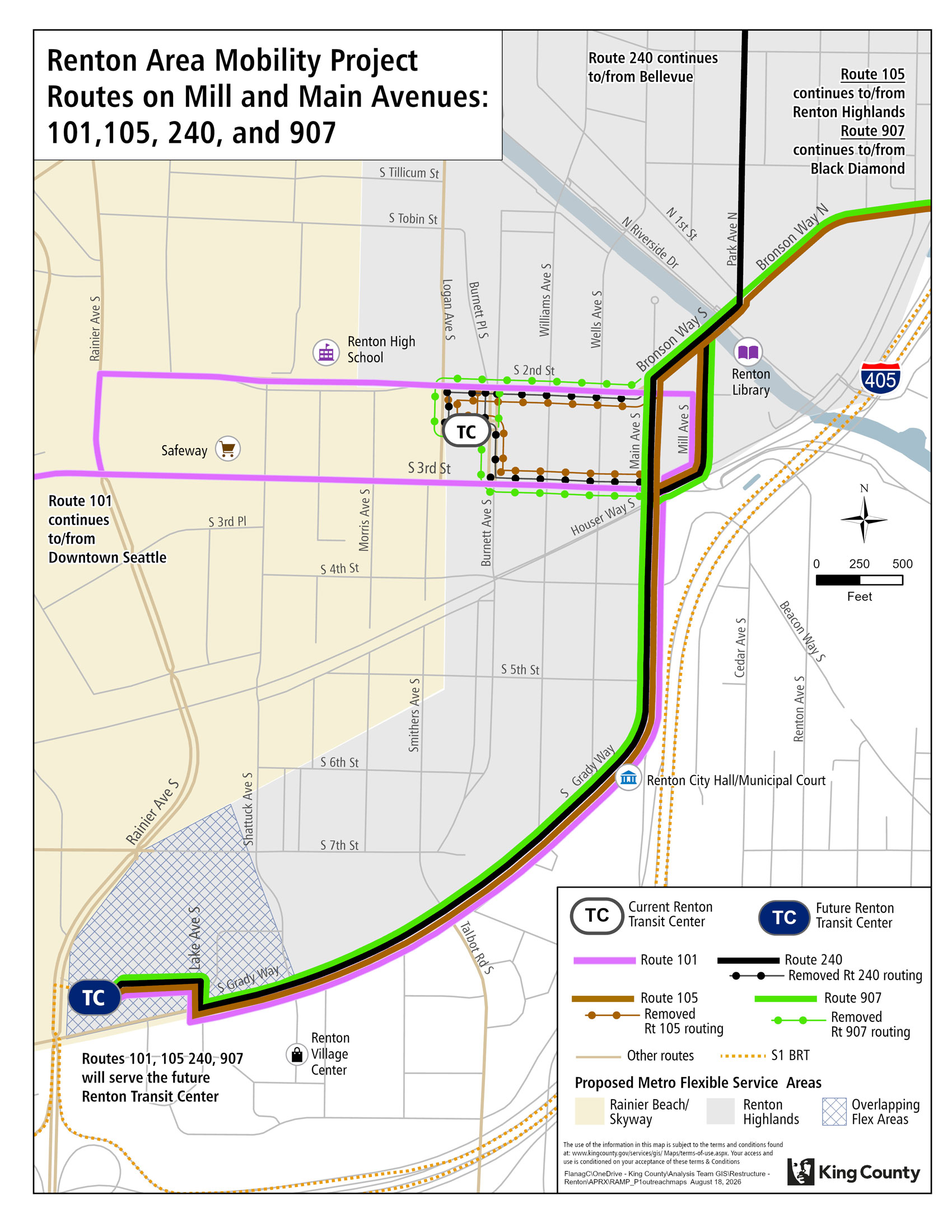
- Main Avenue and Mill Avenue
- 2nd Street and 3rd Street
Multiple routes will operate along these streets, making it easier to transfer between services.
Service to downtown Renton
Downtown Renton will continue to have frequent service, including:
- East-west service
Route 101 and RapidRide F and I lines (current Route 160) on 2nd Street and 3rd Street - North-south service
Routes 101, 105, 240 and 907 on Main Avenue and Mill Avenue. - Metro Flex
Service in Rainier Beach/Skyway and Renton Highlands
Service level adjustments
The project proposes a few changes to how often buses run:
- Trips on Route 102 that currently start and end at the South Renton Park & Ride would become Route 101 trips. This would provide 15-minute service between Renton and Seattle throughout the weekday. The total number of trips between Renton and Downtown Seattle will be the same as today.
- Route 907 would start earlier and run later.
- Service levels would remain the same on all other Metro routes in Renton.
Coverage
Service would continue on most streets where buses operate today, but there are a few exceptions.
- Near South Renton Park and Ride and the future Renton Transit Center
Bus service would no longer operate on South 7th Street, Shattuck Avenue South or through the South Renton Park & Ride on Lake Avenue South. - South of I-405
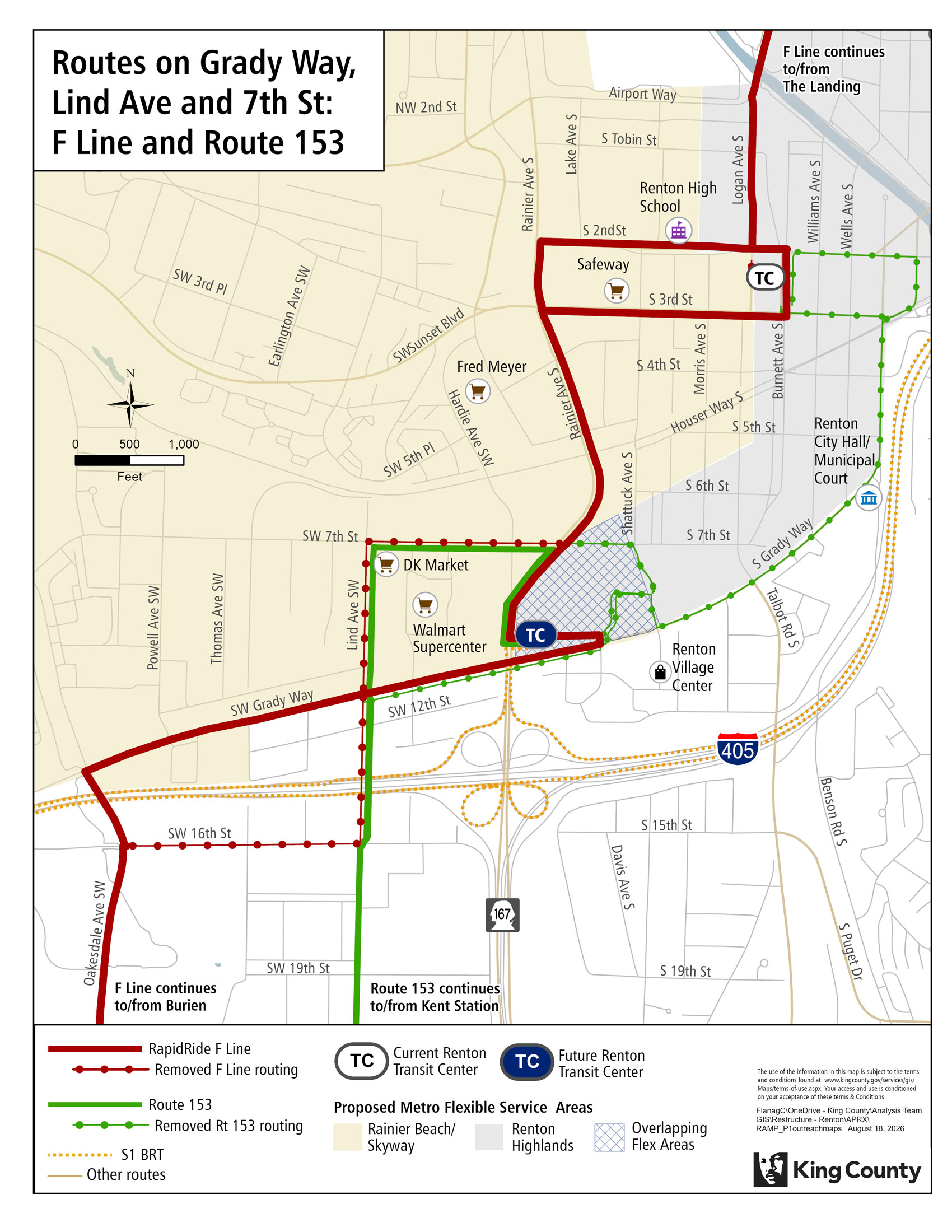
RapidRide F Line would cross I-405 on Oakesdale Avenue SW instead of Lind Avenue SW. Bus service would no longer operate on SW 16th Street. - Near current Renton Transit Center
Bus service would no longer operate on Logan Avenue South between South 2nd and 3rd streets or on the east-west roadway through the current transit center.
Route changes by area
This table details how mobility may change based on the streets where routes are proposed to operate in Renton.
Maps are provided that show how transit pathways may change, and what alternatives riders would have if they are trying to reach destinations that are no longer served by their route.
Route 101
Route 101 will continue to serve downtown Renton via stops on 2nd and 3rd Streets. This route will maintain its current pathway and travel to the future Renton Transit Center via Grady Way. It will also operate every 15 minutes between 6 am to 7 pm on weekdays. The first trip to Seattle will start earlier at approximately 4:45 am on weekdays.
F Line
The F Line will continue to serve downtown Renton via stops on 2nd and 3rd Streets. This route will take the most direct pathway to the future Renton Transit Center via Rainier Ave.
For additional changes to RapidRide F Line, see Routes on Rainier Ave and Routes on Grady Way, Lind Ave and 7th St.
I Line (current Route 160)
The I Line will continue to serve downtown Renton via stops on 2nd and 3rd Streets. This route will take the most direct pathway to the future Renton Transit Center via Rainier Ave.
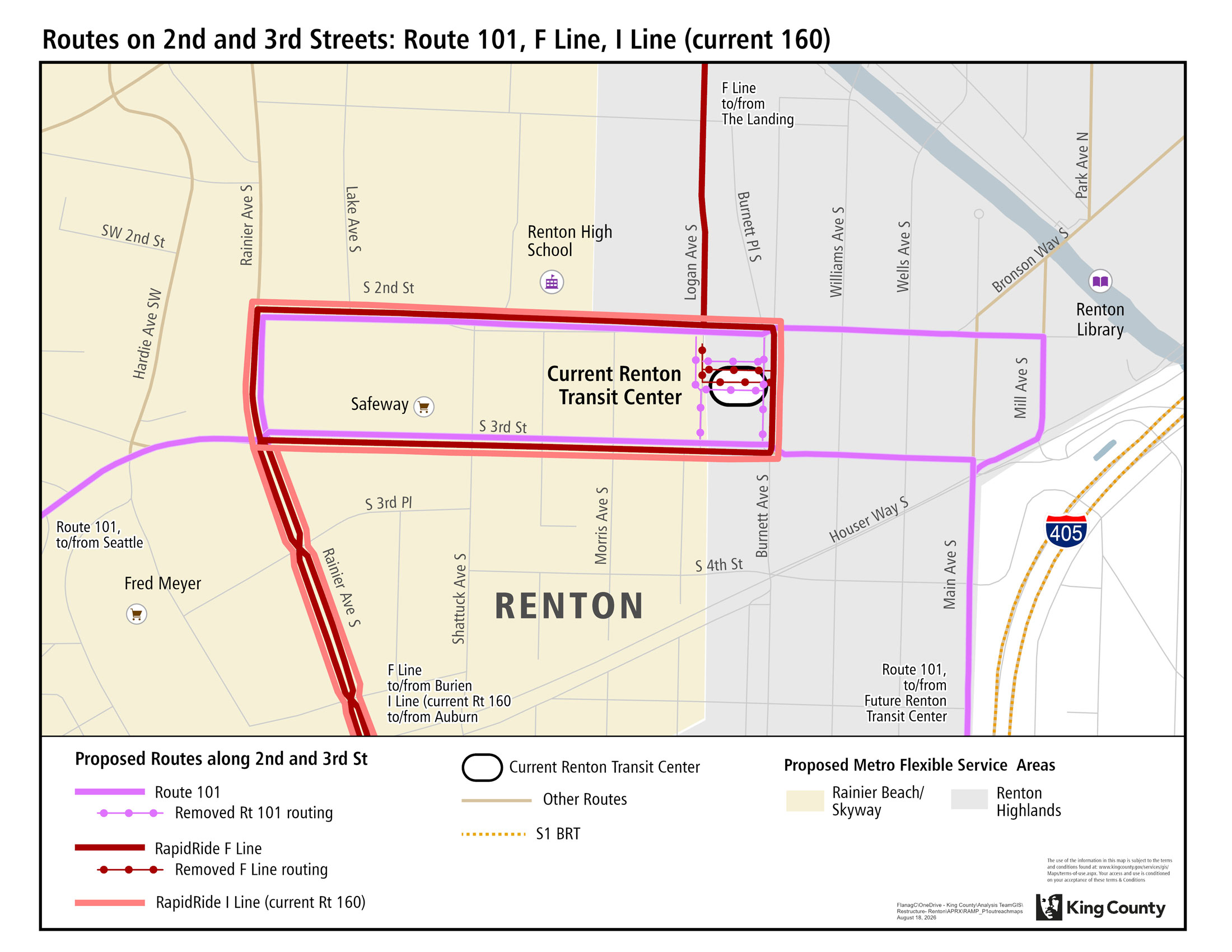
Routes 101, 105 and 240
Routes 101, 105 and 240 will continue to serve downtown Renton via stops on Main Ave, Mill Ave and Bronson Way. These routes will also take the most direct pathway to the future Renton Transit Center via Grady Way.
Route 143
Route 143 will be permanently removed, as other routes would provide all-day service to the same locations that Route 143 served before it was suspended in 2020. Some resources from this route will be reinvested to improve service hours for Route 907.
Route 907
Route 907 will continue to serve downtown Renton via stops on Main Ave, Mill Ave and Bronson Way. These routes will also take the most direct pathway to the future Renton Transit Center via Grady Way. This route will have increased service hours from removed Route 143. On weekdays, service will now start earlier (6 am) and end later (6 pm).
All routes listed below will take the most direct path to the future Renton Transit Center via Rainier Avenue.
Route 102
Route 102 will not directly serve downtown Renton. This route currently does not serve downtown, however trips that start/end at the South Renton Park and Ride will become Route 101 trips to provide more opportunities for riders to reach downtown.
Route 102 will continue to serve Fairwood with the same number of trips as today.
Routes 106 and 107
Routes 106 and 107 will not directly serve downtown Renton. Riders can reach downtown via transfer at the future Renton Transit Center, southbound on Rainier & 3rd Pl and eastbound on Sunset & Hardier.
F Line and I Line (current Route 160)
The F Line and I Line (current Route 160) will continue to serve downtown Renton via stops on 2nd and 3rd Streets.
For additional changes to RapidRide F Line, see Routes on 2nd & 3rd Streets and Routes on Grady Way, Lind Ave and 7th St.
F Line
F Line will take the most direct path to the future Transit Center via Grady Way and will no longer serve SW 16th St, Lind Ave or 7th St.
For additional changes to RapidRide F Line, see Routes on 2nd & 3rd Streets and Routes on Rainier Ave.
Route 153
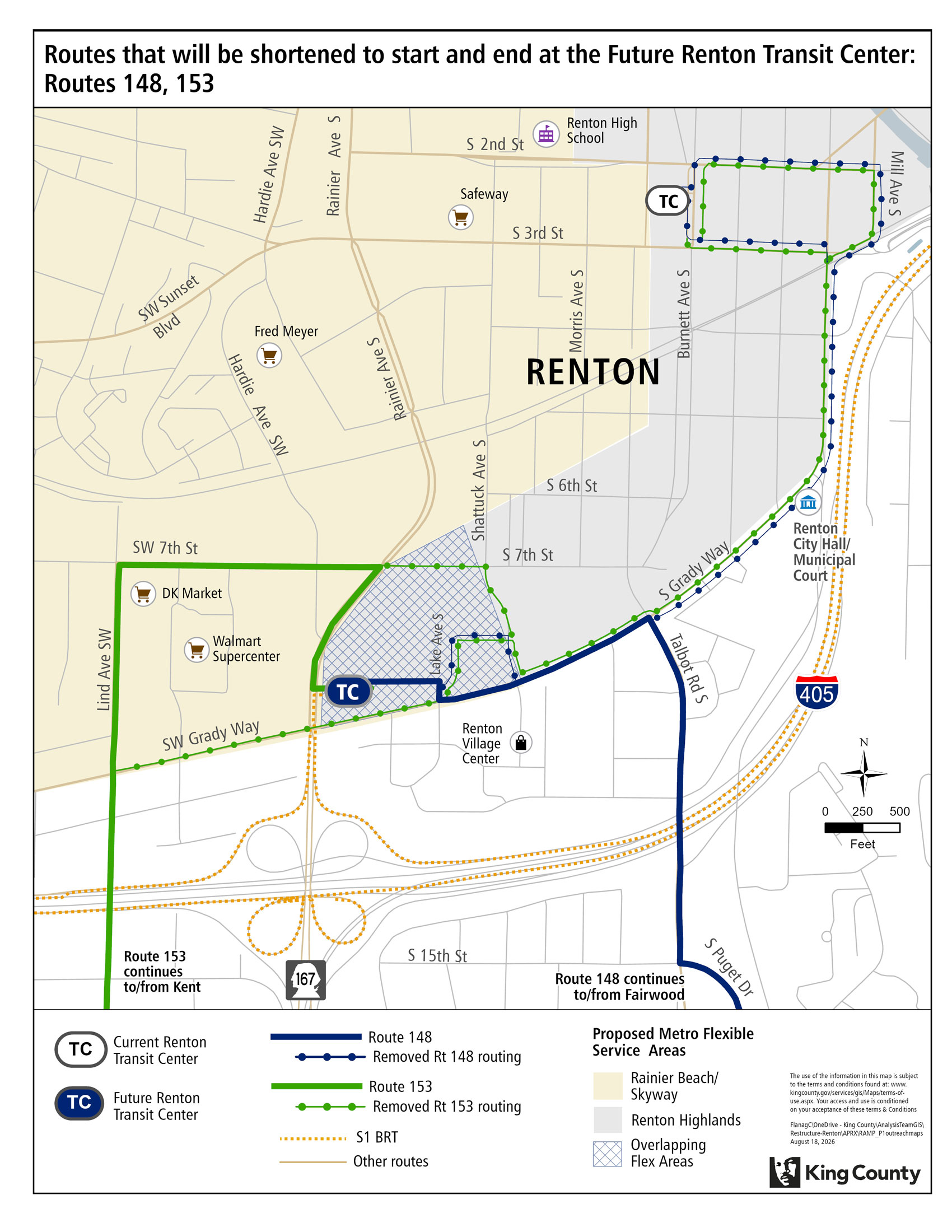
Lind Ave and 7th St will be served by Route 153 in both directions.
For additional changes to Route 153, see route changes for Routes that will be shortened to start and end at the future Renton Transit Center.
Routes 148 and 153
These routes will no longer serve downtown Renton, however riders can reach downtown Renton by transferring at the future Renton Transit Center to routes 101, 105, 240, 907, I Line (current Route 160) or F Line.
For additional changes to Route 153, see Routes on Grady Way, Lind Ave and 7th St.
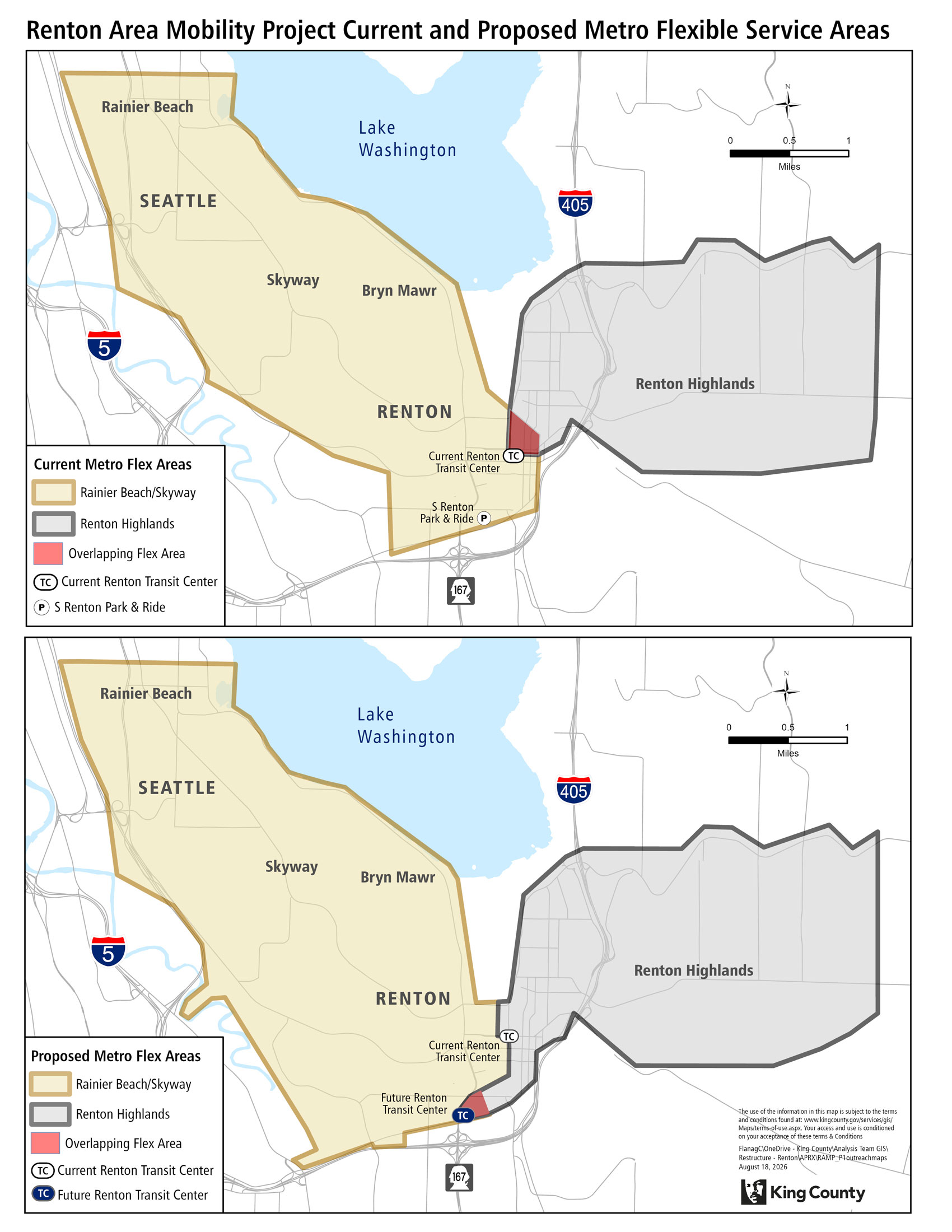
Rainier Beach/Skyway and Renton Highlands
Both Metro Flex zones will serve the future Renton Transit Center with on-demand service. These zones will continue to serve downtown Renton with some boundary changes to limit zone overlap and rider confusion.
Project timeline
During this first phase of engagement, Metro will inform the general public —including riders in impacted communities—about the project scope and vision, We will share the proposed bus route and Metro Flex changes.
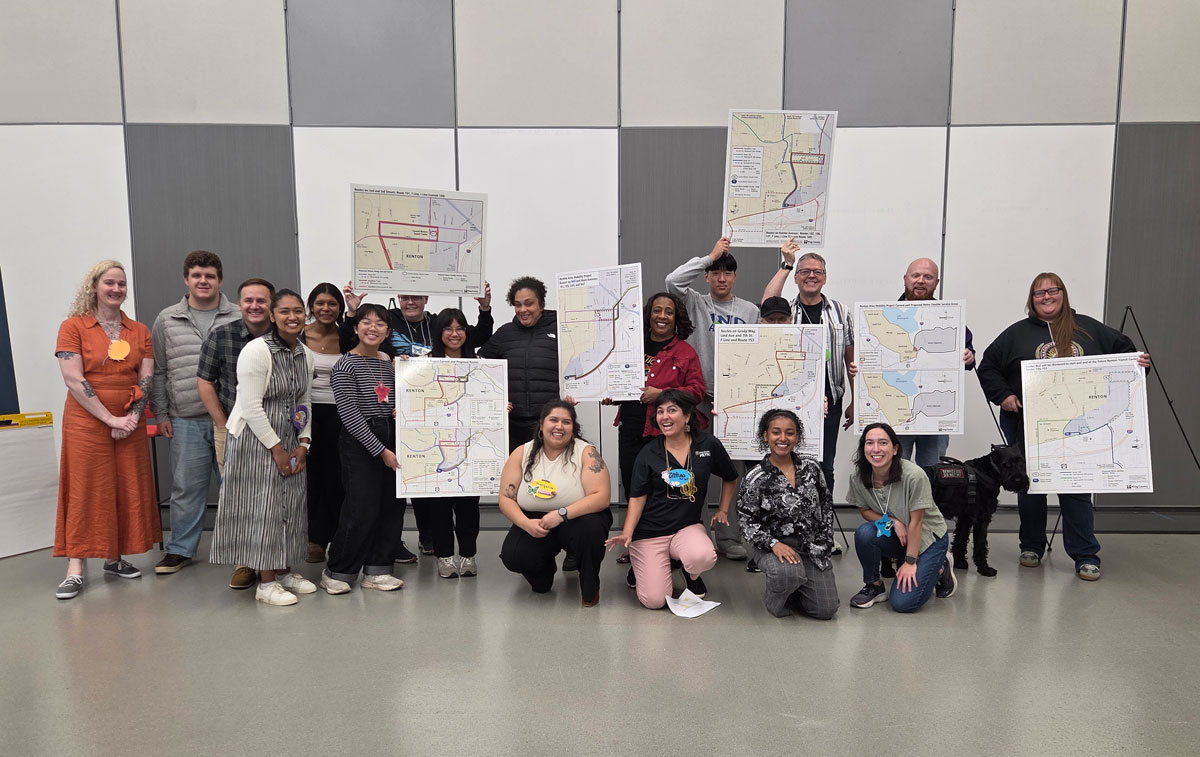
We developed a mobility board of people who live, work or travel through Renton, that is working closely with Metro staff to guide concept development.
We will work with community-based organizations and other key stakeholders to gather multi-lingual feedback on the proposed changes to learn more about community priorities and how they should inform the final proposal.
In the final phase of engagement, Metro will present a proposed transit service plan to the public, explaining how community input from Phase 1 influenced any updates. We will seek multi-lingual feedback on how to further improve the plans before finalizing them.
Finally, we will summarize the previous phase of engagement and project development, review how community input, priorities and equity analysis influenced concept development and the final service proposal and explain any other related next steps.
In winter 2028, the King County Executive plans to submit a final ordinance package of the proposed Renton Area Mobility Project investments to the King County Council for consideration and a vote.
Pending council approval, the Renton Area Mobility Project would be implemented as early as fall 2028.
Mobility Board
Metro has brought together a 15-member Renton Area Mobility Board made up of people who live, work and/or travel in the city of Renton.
The board equitably represents groups of people historically left out of decision-making conversations related to transit, and who are disproportionately affected by these decisions.
The Mobility Board’s primary role is to consider community input and other factors in collaboration with Metro staff to develop and refine a coordinated transit network in and around downtown Renton.
Related projects in Renton
Stride S1 Line
The Sound Transit Stride S1 Line will connect communities along I-405 and SR 518 from Bellevue to Burien. Like all Stride routes, buses on the S1 Line will run every 10 to 15 minutes, 17+ hours per day, seven days a week. The S1 Line will provide seamless transfers to transit services provided by Sound Transit and King County Metro.
Renton Downtown Civic Core Vision and Action Plan
Adopted in 2018, the Renton Downtown Civic Core Vision and Action Plan refers to a coordinated set of public and private investments intended to transform downtown into a more vibrant, walkable, mixed-use destination. It will revitalize downtown with daily activities, small business support and community gathering areas.
RapidRide I Line
King County Metro will upgrade Route 160, which currently runs between Renton, Kent and Auburn—to the future RapidRide I Line. RapidRide is part of a larger, system-wide approach to improve transit access in south King County, and I Line service is planned to begin in 2027. Construction of the associated capital improvements is currently underway.