
 Translate
Hot weather preparedness
When it's hot, the number of people in King County who have serious health problems like heart attacks, stroke, and kidney failure rises with the temperature.
Short URL: kingcounty.gov/beattheheat
Who is at higher risk
If you are in one of these groups, take extra precautions to stay cool, drink water, and take breaks from the heat:
- Older adults (65 and older)
- Young children
- People with chronic health conditions or mental illness
- Athletes who exercise outdoors
- Outdoor workers
- People living unsheltered or homeless
Medications and health conditions can make you more sensitive to heat, including those for allergies and colds, thyroid, depression, heart/blood pressure, and weight loss. Check with your doctor about your health conditions and medications.
What to do on hot days
-
Check on at-risk friends, family and neighbors
-
Stay cool
- Spend time in air-conditioned buildings (such as malls, movie theaters, or libraries) if you can and avoid direct contact with the sun.
- Some cities in King County may offer cooling centers for those who need them.
- Reduce physical activity and move to shaded areas.
- Do outdoor activities in the cooler morning or evening hours.
- Cool your body down quickly by wearing a wet scarf, bandana, or shirt.
- Spend time in air-conditioned buildings (such as malls, movie theaters, or libraries) if you can and avoid direct contact with the sun.
-
Stay hydrated
- Drink plenty of water and don't wait until you're thirsty to drink more.
- Limit or avoid caffeine and alcohol. They can be dehydrating.
- Drink plenty of water and don't wait until you're thirsty to drink more.
-
No infants, children and pets in parked cars
Never leave infants, children or pets in a parked car, even if the windows are cracked open. It only takes a few minutes for severe medical problems and even death to occur.
-
Watch for signs of heat exhaustion or heat stroke
Seek medical care immediately if you know someone who experiences symptoms. See below for additional details.
-
Check the risk for heat
See whether there’s a risk of health problems from heat in your zip code at the National Weather Service HeatRisk page. You can get the full weather forecast from National Weather Service.
Water safety
Some people turn to local rivers to cool off, but drowning is a real concern. Please use caution and wear a personal flotation device (PFD) on the water. Find deals on affordable lifejackets. And if you want to swim, choose a safer location – visit a local pool or lifeguarded beach instead.
Recognizing heat exhaustion and heat stroke
When people's bodies can't cool themselves quickly enough it can cause heat exhaustion. Symptoms of heat exhaustion include muscle cramps, weakness, dizziness, headache, nausea and vomiting. If you see someone with signs of overheating, move the person to a cooler location, have them rest for a few minutes and then slowly drink a cool beverage. Get medical attention for them immediately if they do not feel better.
Heat exhaustion can lead to heat stroke, which can cause death or permanent disability unless treated immediately. Symptoms of heat stroke include:
- An extremely high body temperature (above 103°F)
- Red, hot, and dry skin
- Rapid, strong pulse
- Nausea, confusion and unconsciousness
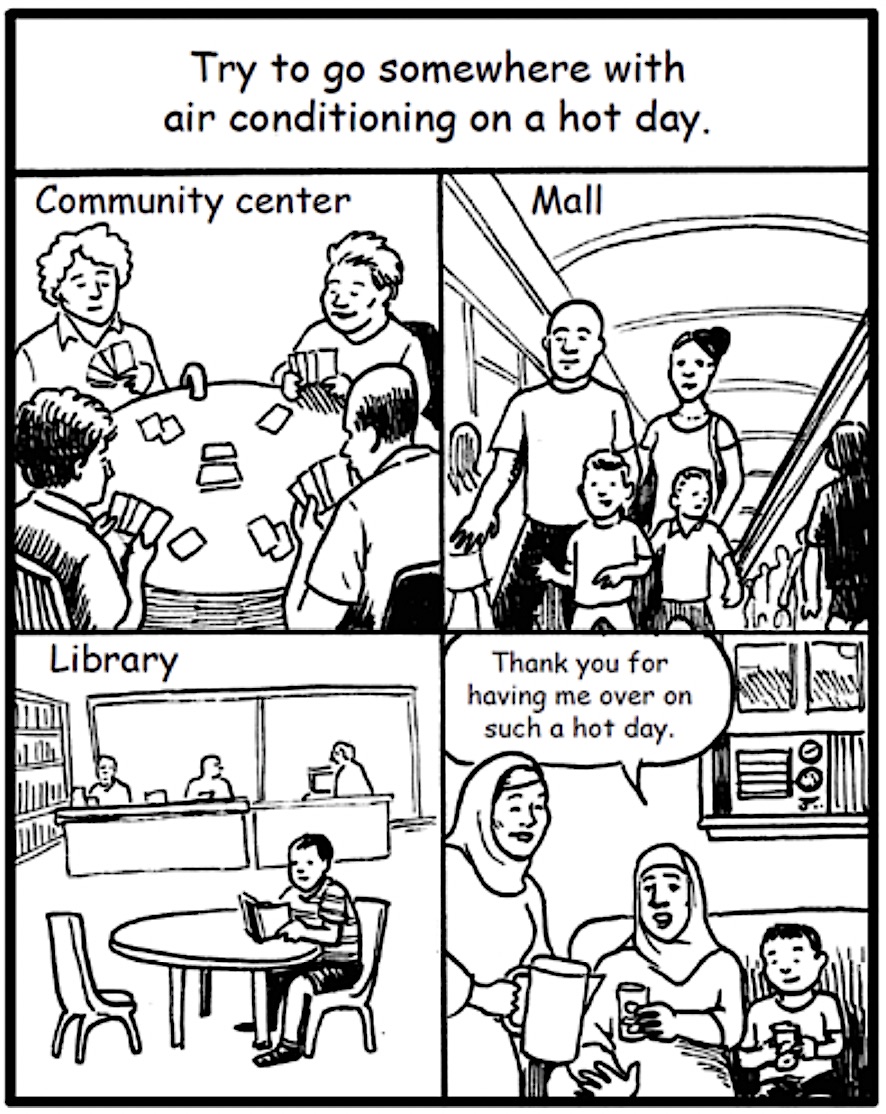
Stay Safe in the Heat, mini comic book
Guidance for preventing heat illnesses during hot weather, especially for people who are at higher risk, such as outdoor workers, people with chronic health conditions, and children. This downloadable document can be photocopied double-sided.
- Stay Safe in the Heat (English)
- በሙቀት ጊዜ ደህንነትዎን ይጠብቁ (አማርኛ / Amharic)
- 天氣炎熱請注意安全 (繁體中文 / Chinese, Traditional)
- Rester sain duran la chaleur (Français / French)
- 열에 안전하게 유지하십시오 (한국어 / Korean)
- Берегите себя при жаре (Русский / Russian)
- Kuleylka ka badbaad (Af Soomaali / Somali)
- Mantenerse seguro en el calor (Español / Spanish)
- Mananatiling ligtas sa init (Wikang Tagalog/Filipino)
- Бережіть себе під час спеки (Українська / Ukrainian)
- Đảm bảo an toàn khi trời nóng (Tiếng Việt / Vietnamese)
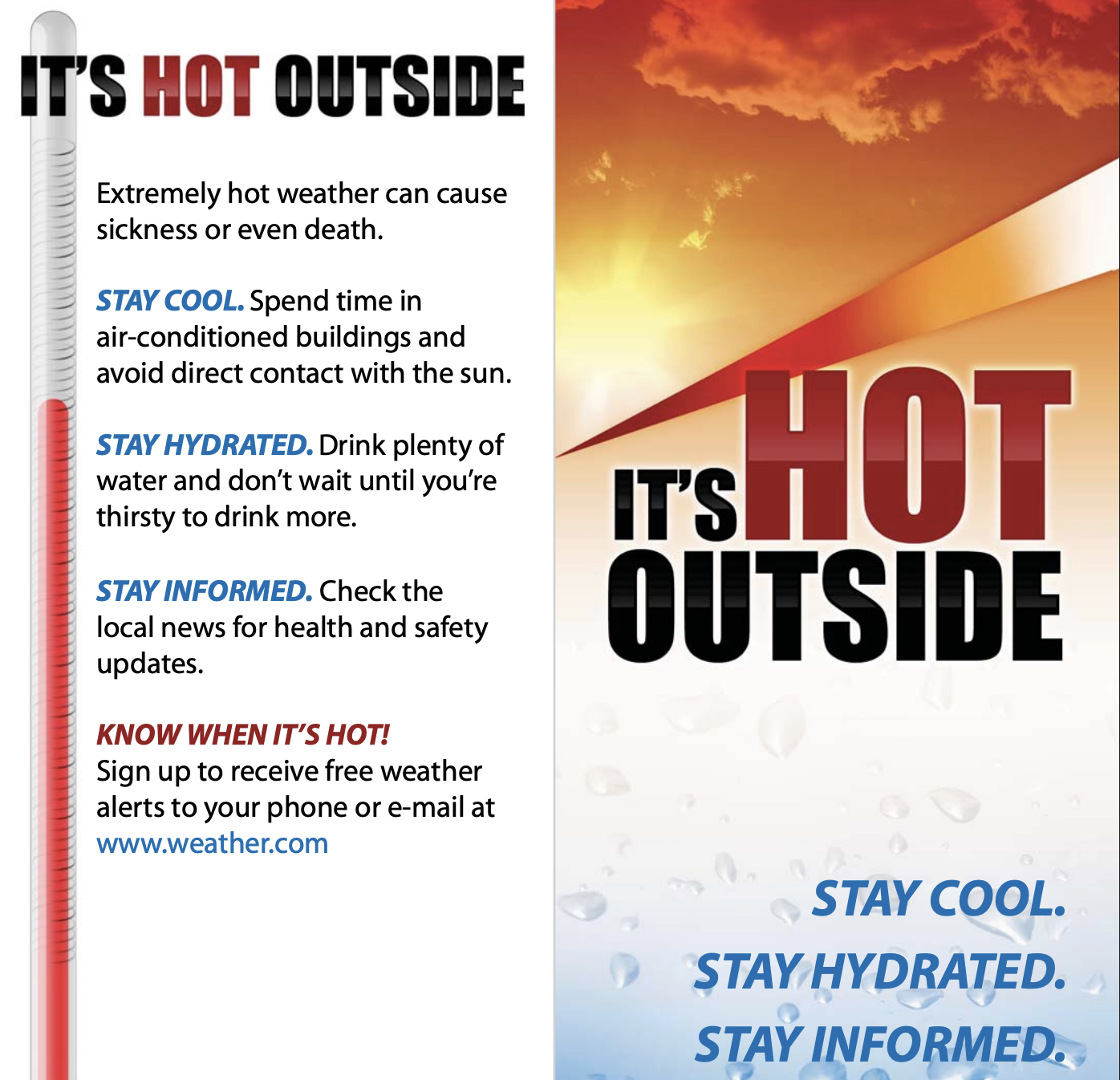
It's Hot Outside brochure
- It's Hot Outside (English)
- 戶外酷熱 (繁體中文 / Chinese, Traditional)
- Hace Calor Afuera (Español / Spanish)
- Bên ngoài rất nóng (Tiếng Việt / Vietnamese)

Withstanding the Heat:
A Domestic Violence Survivor Story
Research shows that during extreme weather events the level of violence rises, including domestic violence. A local woman shares the physical and emotional toll that hot weather had on her—and how she found help and support.
- Withstanding the Heat: A Domestic Violence Survivor Story (English)
- ሙቀትን መቋቋም፡ የቤት ውስጥ ብጥብጥን አስከትሎ ከሚመጣ ጥቃት የተረፈ ሰው ታሪክ ። (አማርኛ / Amharic)
- 承受酷热:一位家庭暴力幸存者的故事 (简体中文 / Chinese, Simplified)
- 抵禦高溫:一位家庭暴力倖存者的故事 (繁體中文 / Chinese, Traditional)
- 더위를 이겨낸 다는 것: 가정 폭력 생존자의 이야기 (한국어 / Korean)
- Испытание жарой: история женщины, пережившей домашнее насилие (Русский / Russian)
- U-adkaysanaya Kulaylka: Sheeko ku saabsan ka-bad-baade rabshad guri (Af Soomaali / Somali)
- Soportando el Calor: La Bistoria de una Superviviente de Violencia Domestica (Español / Spanish)
- Сувора погода: історія людини, яка пережила домашнє насильство (Українська / Ukrainian)
- Chịu Đựng Cái Nóng: Câu chuyện của một người sống sót sau bạo lực gia đình (Tiếng Việt / Vietnamese)
More heat resources
- Burn bans, King County Fire Marshal
- Public transportation alerts, King County Metro Transit
- Cooling centers, Washington 2-1-1
- Pet tips and resources, Regional Animal Services of King County
- King County Weather Forecast, National Weather Service
- Extreme heat emergency preparedness, King County Office of Emergency Management
- Heat Safety Tips, Ready.gov