
 Translate
About the Black Diamond Sewer Upgrade Project
Find details about the Black Diamond sewer upgrade project schedule. You can also read common questions and answers about the project.
Project schedule
in 2024, King County hired consultants to help design the project. The team also began community engagement at that time. Engagement will continue through the whole project. To learn more, visit the Public engagement page.
-
2022: Pre-Design (complete)
- King County brings the project team together. The team includes many subject matter experts. These experts will help the project meet operational goals and fit the area. They also work to reduce impacts on people and the environment.
- The team begins project planning.
- The team reviews past research of the existing pipe and project area.
-
2024: Design (current)
- Field work and outreach begin. These activities help inform design.
- The team reviews and refines the options to repair, expand or add new pipes in the area.
- This phase will continue through 2028.
-
2026: Contractor selected
- King County selects Merlino-Goodfellow Joint Venture (MGJV) as the construction contractor.
- The contractor will provide input as design continues. This may include feedback on construction methods, traffic control, and possible early work.
-
2028: Pre-construction activities
The contractor may begin activities to prepare the area for construction. Activities may include:
- Clearing work areas.
- Building temporary access roads, storage areas, or trailers.
- Grading uneven areas.
- Setting up temporary utilities or bypass systems.
- Installing erosion and sediment control.
-
2029: Construction
The contractor may begin activities to prepare the area for construction. Activities may include:
- The contractor builds the project based on the design.
- The Construction Management team oversees the work.
- Community Services supports project neighbors, area users, and visitors by:
- Sharing advance notice about closures, detours, or access changes.
- Providing updates on construction progress.
- After construction, the contractor restores streets, sidewalks, and plants.
- This phase will continue through 2031.
-
2031: Operations
King County staff will:
- Test the pipe and begin operations.
- Schedule regular pipe inspection and maintenance.
- Check and maintain landscapes per contract requirements.
*Please note, these timeframes are estimates and may change. They may shift because of permit needs or unexpected delays.
Project questions
These questions and answers are available in English, Spanish, and Vietnamese.
About the project
Black Diamond is growing fast. In 1992, the City of Black Diamond built a regional sewer pipe with help from King County. This pipe carries wastewater from the city to South Treatment Plant in Renton. Today, the pipe is almost full. King County plans to upgrade it to serve more people. We may repair the pipe, make it bigger, or add new pipes.
The Black Diamond Trunk Sewer carries wastewater from the City of Black Diamond to King County’s South Treatment Plant in Renton. There, the water is treated and released safely into Puget Sound. Upgrading the sewer will help the system work. It will also support the city as it grows.
This project covers about six miles of pipe between:
- the Lake Sawyer Road SE and Ten Trails Parkway Southeast intersection
- the Southeast Timberlane Boulevard and 185th Avenue Southeast intersection.
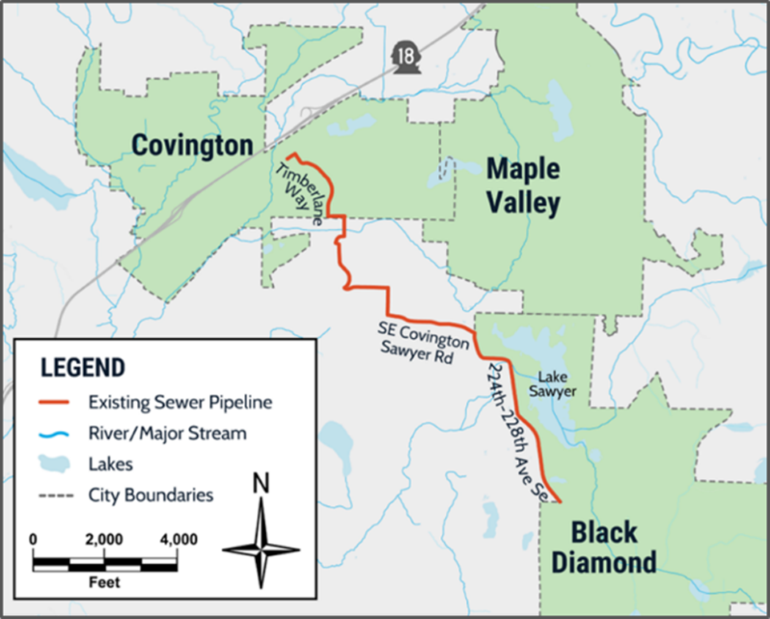
We are designing the project now. We should be finished in 2027. We will start construction after that. It should take about five years. We will share updates with the community if the schedule changes. View the project schedule.
Traffic, access and expected impacts
We will know the order of the work after a contractor joins the team in 2026. They will help us plan where to start and how to move through the project area.
Much of the existing sewer pipe is built under roads between Black Diamond and Covington. Fixing or replacing the pipe will affect traffic. In 2026, our contractor will help us plan how to keep people moving. They will help us plan for:
- access to homes, businesses, and schools
- daily travel
- deliveries
- emergency services
Yes. During construction, detours or flaggers will help keep traffic moving. We will share updates about access as soon as we have them.
Crews will use detours or flaggers to help cars and buses reach schools. This is most important during busy times like drop‑off and pick‑up. We are working with nearby schools to plan safe routes. We are also learning about school schedules. We will keep meeting with schools as we continue project design.
Maintaining access for emergency services is a top priority. Fire, police, and medical teams should be able to get through all work areas. We will work on how we will maintain access as we design the project and plan traffic control.
We do not know yet. If we need to close a road, we will:
- tell the community early
- make sure people can reach their homes, businesses, and services or plan other options
- keep access open for all emergency services and deliveries
We often build long sewer projects in small sections. We will look at this option as design continues.
Construction methods and what to expect
In general, construction tools and practices have improved since 1992. We will do our best to reduce impacts. There will be chances for people to share feedback on our plans as we continue design.
We are considering both trenchless and open cut construction methods. The method we choose depends on what each area of the project needs. It will also depend on the space we have to work in. We often choose trenchless construction when:
- the work area is in an environmentally sensitive area
- the work area has limited space
We also look at how each method may affect people who live or work nearby.
This depends on the construction method and the condition in each area. We will share timelines for each neighborhood as design continues.
Sewer service, odor, and local benefits
No. People cannot connect directly to the regional sewer pipe. Local sewer agencies manage the smaller pipes near homes and businesses that people can connect to. They also decide where people can connect to new sewer service. King County moves and treats the wastewater that local agencies send to us. To ask about sewer service, contact:
- Soos Creek Water District
- City of Black Diamond
- King County Local Services (for unincorporated areas)
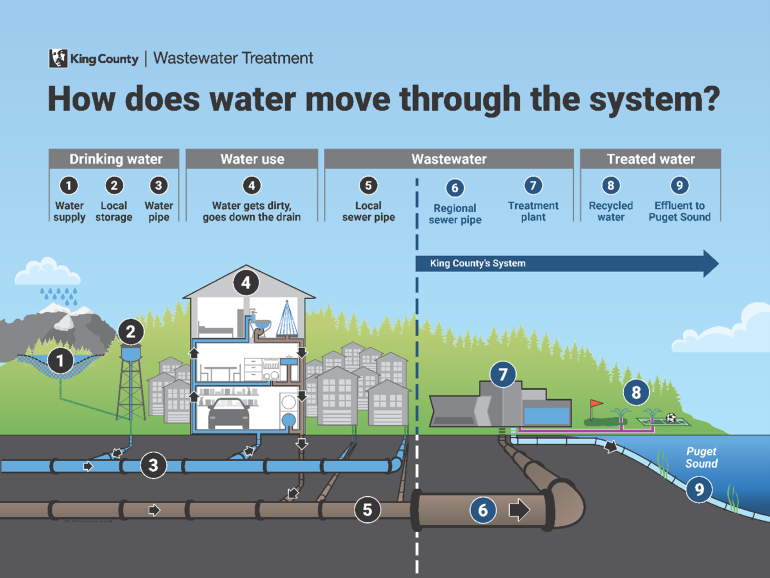
King County builds sewer pipes where they can safely and reliably move wastewater. When we plan for new pipes, we look at many trade-offs. These help us:
- connect new pipes to the current system
- meet system needs
- lower impacts on people and the environment
- follow permit and environmental rules
Sometimes these needs mean we build pipes in areas that do not have local sewer service. These routes often help us connect to our existing system. In some cases, our new pipes can also make it easier for local agencies to add sewer service in the future.
Treatment plants cost a lot to build, run, and maintain. Being part of a regional system helps cities to share costs and resources. A regional system is also more resilient during emergencies, like big storms.
We do not expect odors to get worse. We work hard to control smells in our system. As design continues, we will share more information about how we will manage odors.
The project may allow us to install or upgrade odor control systems in the areas we build. Upgrades can help the system work better. This may reduce smells in some places.
Cost and funding
People who pay a monthly sewer bill cover most of the cost for King County’s wastewater utility. This fee helps run our services and pay for projects and programs. People who use septic systems do not pay this monthly sewer fee. We also use grants, loans, and operating funds to pay for projects. We work hard to balance these funding sources.
We plan for years before starting a project. This helps us manage costs for our sewer customers.
To learn more, visit our Investing in Clean Water webpage.
Developers may pay part of the cost for the project through the monthly capacity charge. This charge applies to anyone who connects to the sewer system on or after February 1, 1990.
Utilities and property impacts
We do not expect any utility shut offs for this project. If we ever need to turn off a utility, we will tell you ahead of time.
We may need to move plants or soil if we work on or near private property. If we need to work on your property, someone from King County’s property team will talk with you.