
 Translate
SE Jones Road Culvert Replacement Project
SE Jones Road, near house number 17817, opened to traffic on November 20, 2026.
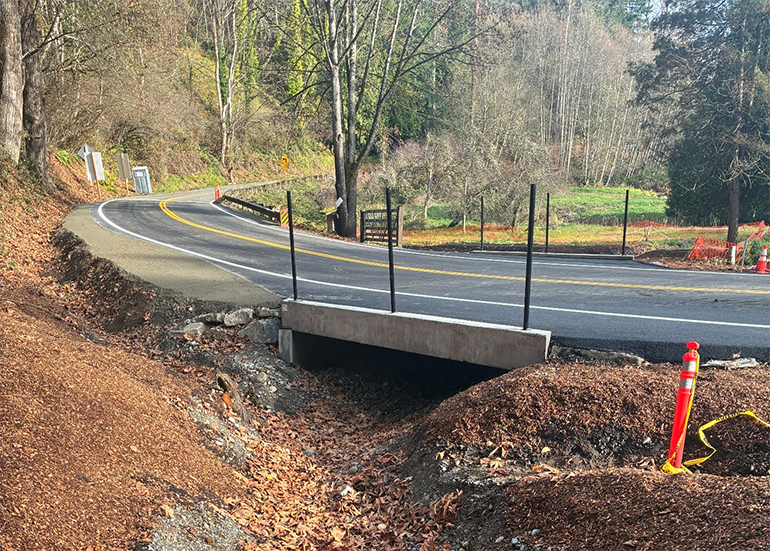
November 19, 2026: The new concrete box culvert on SE Jones Road near Renton will improve drainage, reduce the risk of flooding and roadway damage, and make it easier for fish to move through the stream beneath the road.
Status update
November 20, 2026
King County crews opened SE Jones Road, near house number 17817, on Friday, November 20, 2026, after completing the culvert replacement project. Visit MyCommute for the most updated information about the road reopening.
We are grateful to the community for their patience and understanding throughout construction. The new structure improves safety and reliability for all travelers while also reducing flood risks and making it easier for fish to move through the stream beneath the roadway.
Project overview
King County replaced an aging, rusted metal pipe under SE Jones Road near house number 17817. The pipe was only 3 feet wide, making it prone to clogging from rocks, leaves, dirt, and other debris that washed down from the steep hillside above. Over time, rust and deterioration also increased the risk of the pipe failing.
When the pipe became blocked, water could back up and damage the roadway. During periods of heavy rain, excess water also flowed onto nearby private property, contributing to flooding and erosion.
Because the stream is steep, crews also reshaped a portion of the stream channel and removed some rocks to make the new culvert easier to maintain.
Project location map
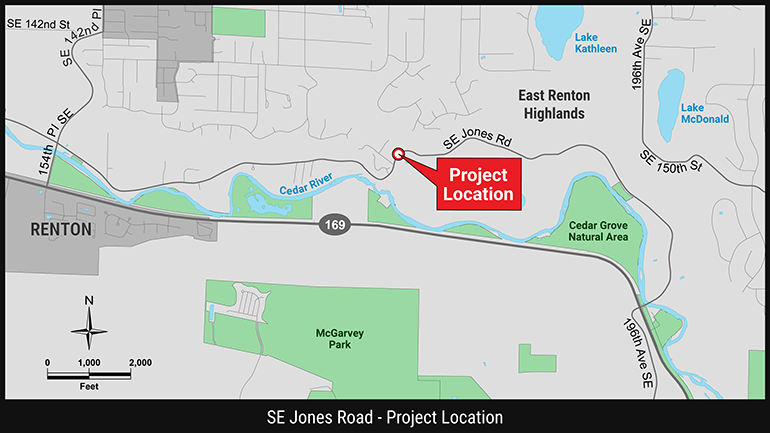
This project was located east of Renton on SE Jones Road (near 17817 SE Jones Road).
Why did King County replace this culvert?
We replaced the narrow metal culvert because it is too small and deteriorated.
The previous narrow metal culvert was replaced because it was undersized, deteriorating, and acted as a barrier to fish passage.
The previous culvert was too small to handle the stream’s water flow, which caused flooding during heavy rains. Its narrow design would also clog with debris, requiring frequent maintenance. This project replaced the deteriorating pipe with a new 14-foot-wide concrete box culvert that is expected to last seventy or more years. It also improves drainage, reduces the risk of flooding, and allows fish to move more easily through the stream beneath the road.
Benefits of the concrete box culvert
Concrete box culverts have many benefits, including durability, strength, and ease of installation.
The new box culvert accommodates a much larger volume of water and has a longer lifespan than a metal pipe.
This culvert was designed to be fish passable and will allow salmon, trout, and other fish to swim farther up this tributary to their spawning grounds.
Funding
This project was funded through the King County Roads Drainage Preservation budget, which is supported by local funding sources.
Project timeline
- Final project design: Early summer 2026
- Construction work began: October 12, 2026
- Substantial construction complete: November 20, 2026
Frequently asked questions
Whenever possible, crews replanted and restored vegetation removed during construction.
A fish passage barrier is anything that makes it very difficult for fish to swim upstream or downstream.
Most fish barriers in unincorporated King County are round pipes (culverts) that channel streams and water underneath the road. Many of these culverts were installed between 30 and 100 years ago. These older culverts allow water to flow but are so narrow and steep that they prevent fish from swimming through them.
The previous concrete pipe was too narrow and acted as a fish passage barrier. The new culvert allows passage to all fish using the stream.
The following species now have the potential to return to the unnamed stream, which serves as a tributary to the Cedar River.
- Chinook salmon
- Coho salmon
- Steelhead trout
- Sea run cutthroat trout
- Resident trout
One of the most effective ways to ensure the survival of native fish – and the southern resident orcas that rely on them as a food source – is to remove barriers to their habitat.
Photos
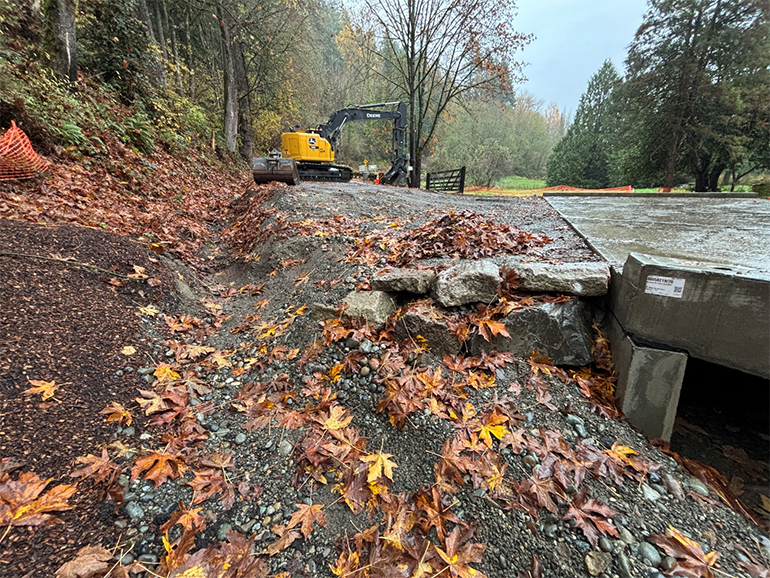
November 10, 2026: Crews installed new rockery along the culvert to act as a wingwall, helping keep the road fill in place and providing added stability to the roadway.
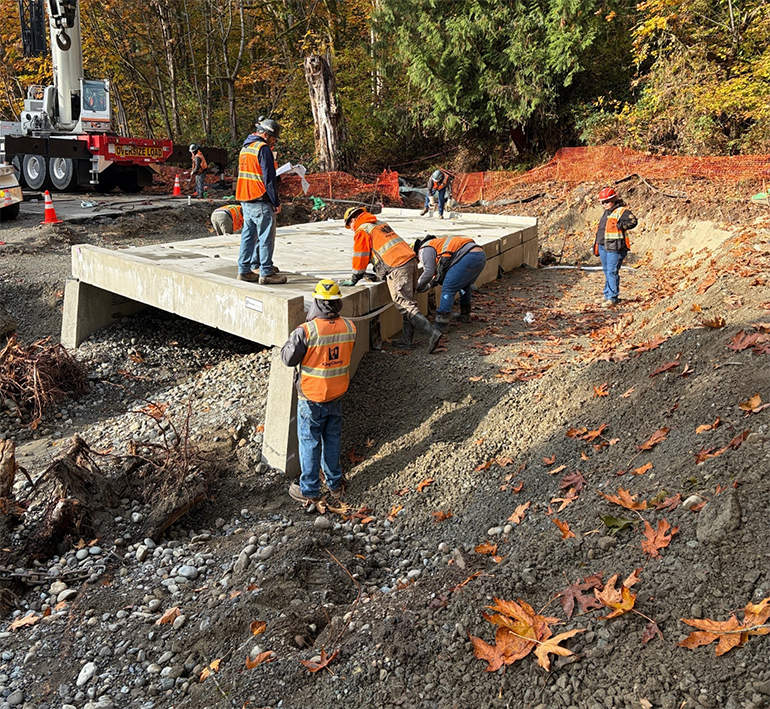
November 2, 2026: Crews are lowering the top sections of the culvert, called the culvert lids, into place.
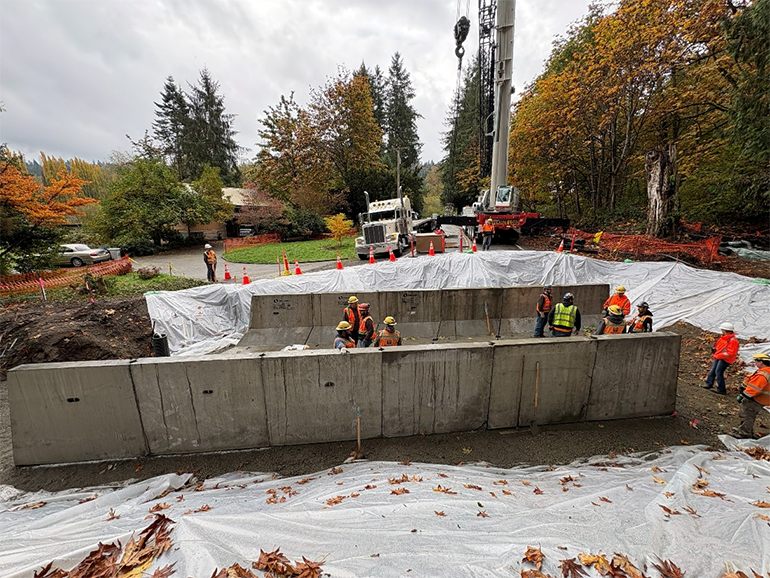
October 27, 2026: All six sections that make up the box culvert base were successfully lowered into place.
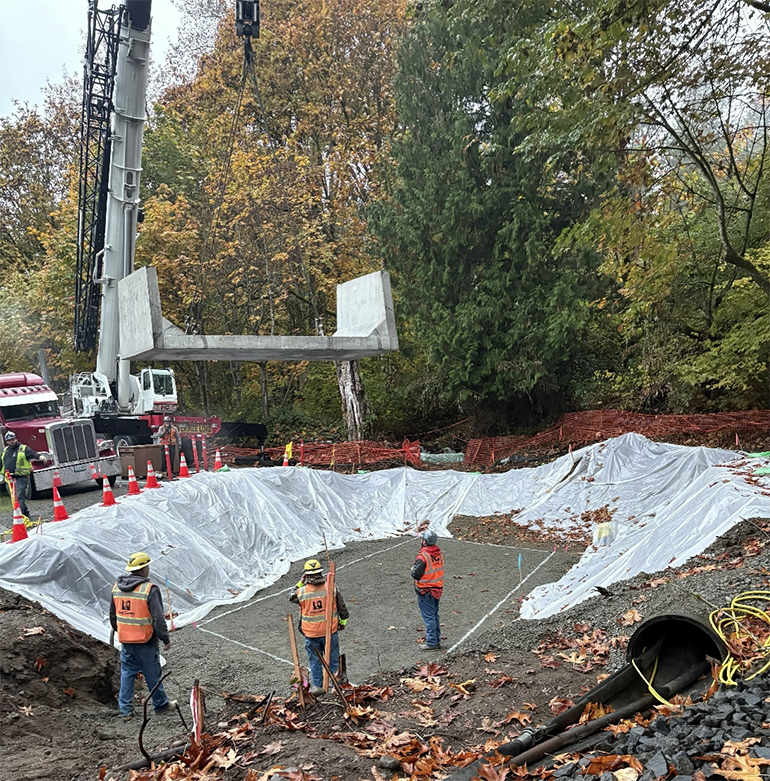
October 27, 2026: Crews lowered sections of the box culvert base into place using a crane.
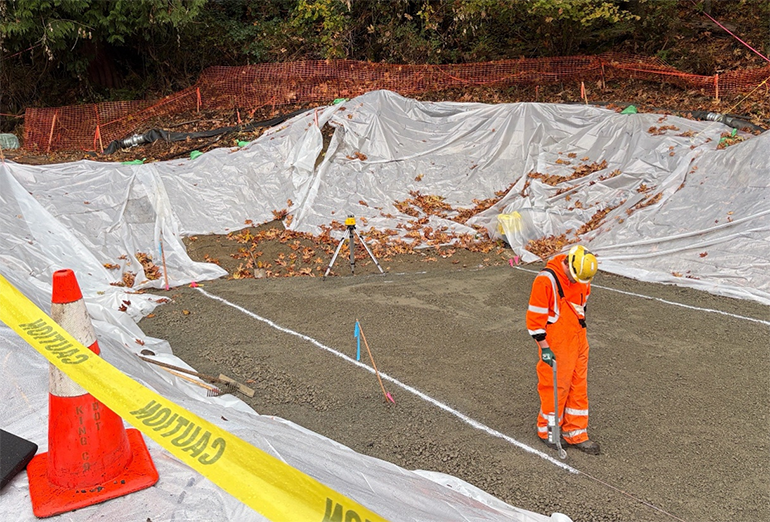
October 26, 2026: Crews are marking the placement area for the box culvert base with white paint. The culvert must be lowered into place with exceptional precision, so these markings are based on detailed survey measurements.
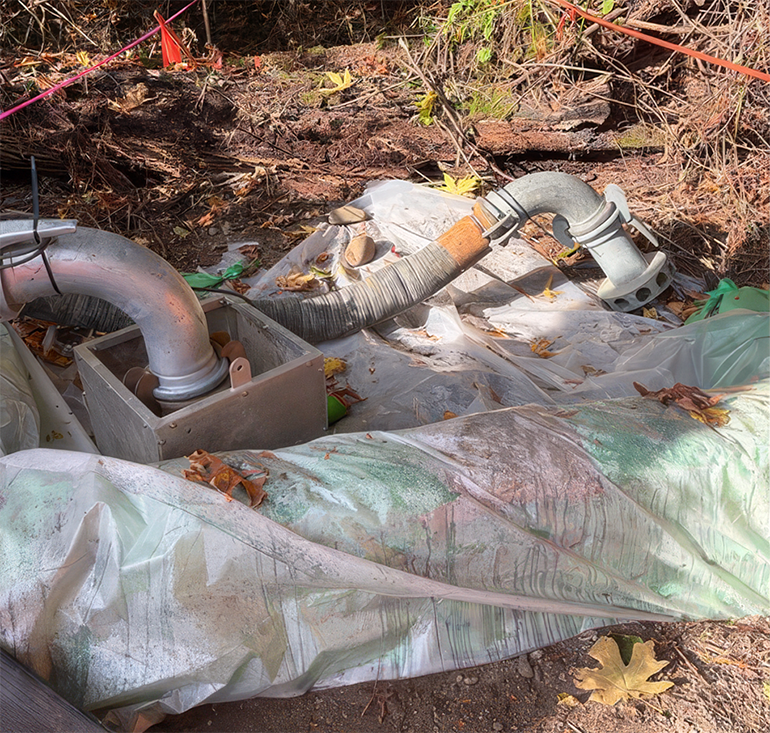
October 19, 2026: Pumps and a temporary stream bypass are in place to divert any potential water flow during construction.
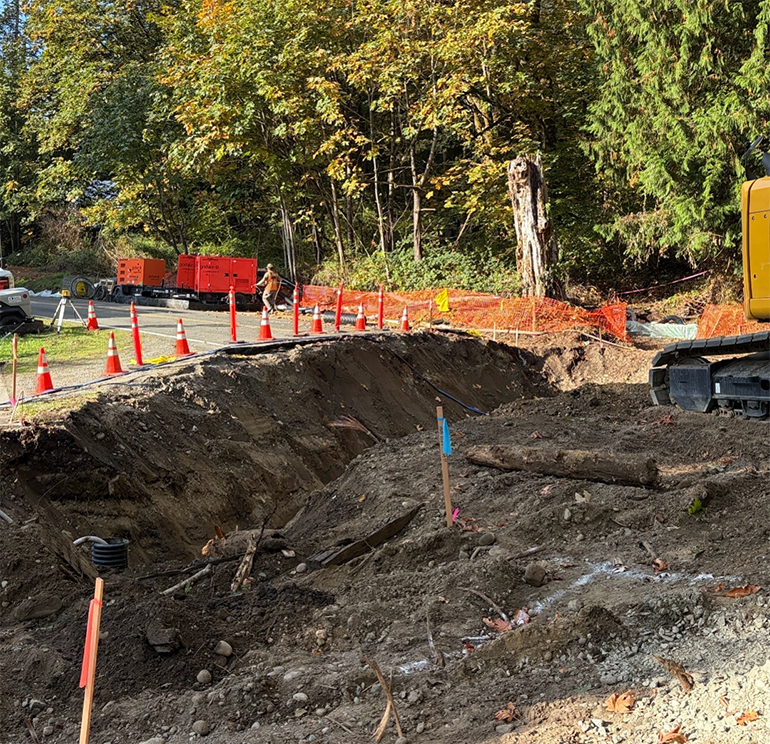
October 19, 2026: Site excavation is underway to prepare the site for culvert installation.
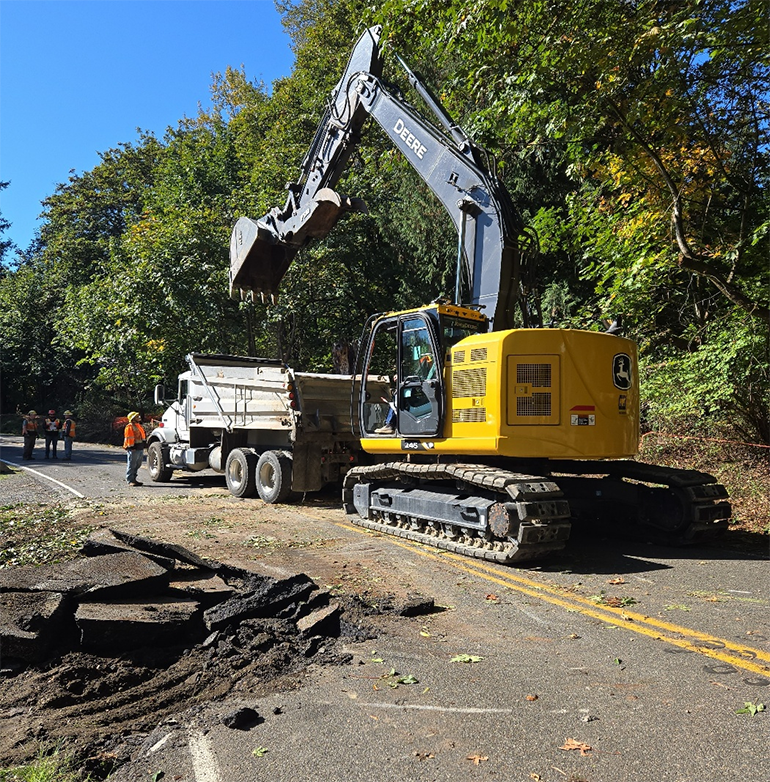
October 12, 2026: Crews began construction on the culvert replacement project. The existing culvert is being replaced with a much larger, fish passable culvert.
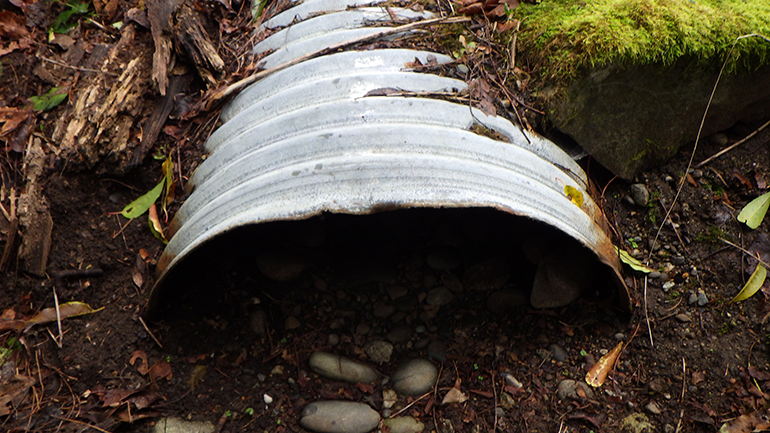
This aging 3-foot-diameter pipe under SE Jones Road is rusting and clogged with debris. It is being replaced with a much larger, fish-passable concrete box culvert.
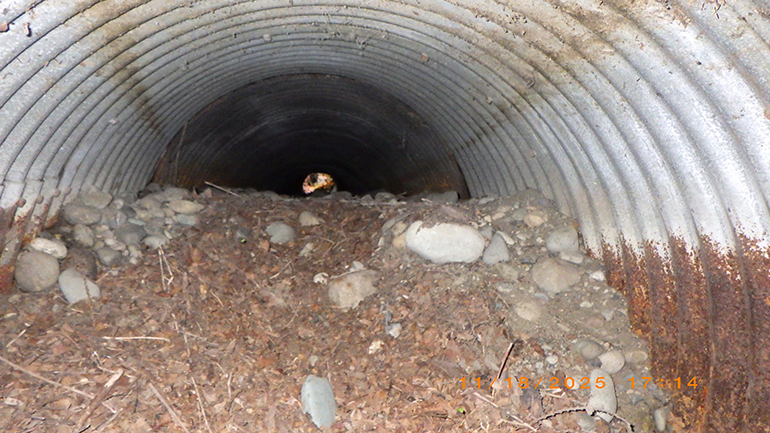
2025: rust and deterioration has worsened, and more rocks and dirt and leaves have built up inside the narrow metal pipe.
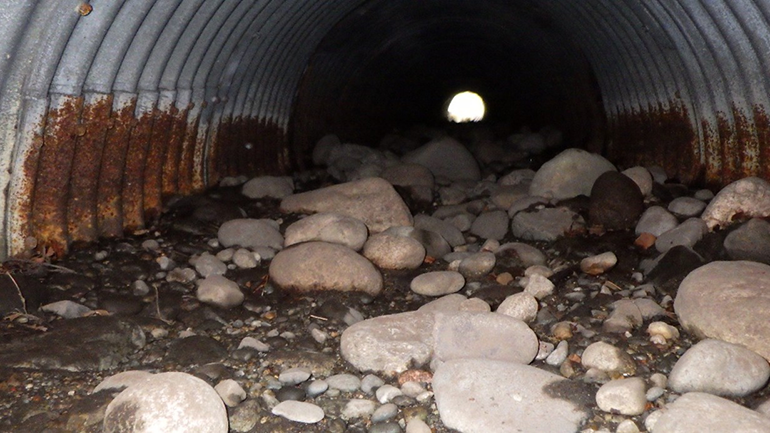
2023: Inside the culvert under SE Jones Road, the small metal pipe is getting blocked by rocks and dirt. This slows down the water, and the pipe is also getting rusty and wearing out.
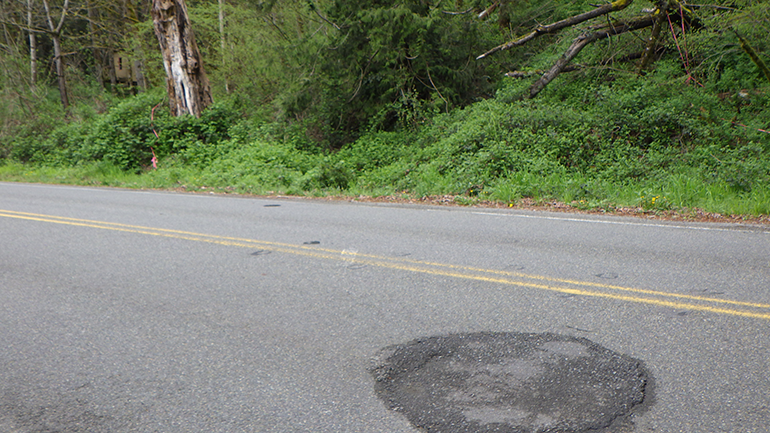
The current 3-foot-wide pipe is deteriorating and contributing to the pothole in this photo.