
 Translate
Cold weather preparedness
Power outages, road closures, freezing temperatures, and floods are some of the most common emergency situations we face in King County. Plan ahead and know what to do during cold weather events to stay safe and healthy.
Short URL: kingcounty.gov/coldweather
Video: How to prepare for extreme cold weather
Watch this video for an overview of how to stay safe common cold weather events, or share out this 30-second summary. Videos in Spanish and Somali are also available.
Make a 3-day plan before a winter storm
-
Have supplies for three days
Road closures due to snow and ice can make it hard to leave home. Store enough food and other essentials like diapers and pet food to last at least 3 days.
-
Make a transportation plan
Make a transportation plan to pick up children, older family and friends, and people with special needs before the weather impacts roads.
-
Plan for medical needs
Make sure you have medications and any special medical supplies, like oxygen tanks or syringes. Have a backup power source, such as a battery or generator, if you have medical equipment that requires electricity. If you depend on dialysis, talk to your dialysis provider about alternative arrangements and consult your healthcare provider about an emergency diet.
Hypothermia
-
Learn to recognize symptoms
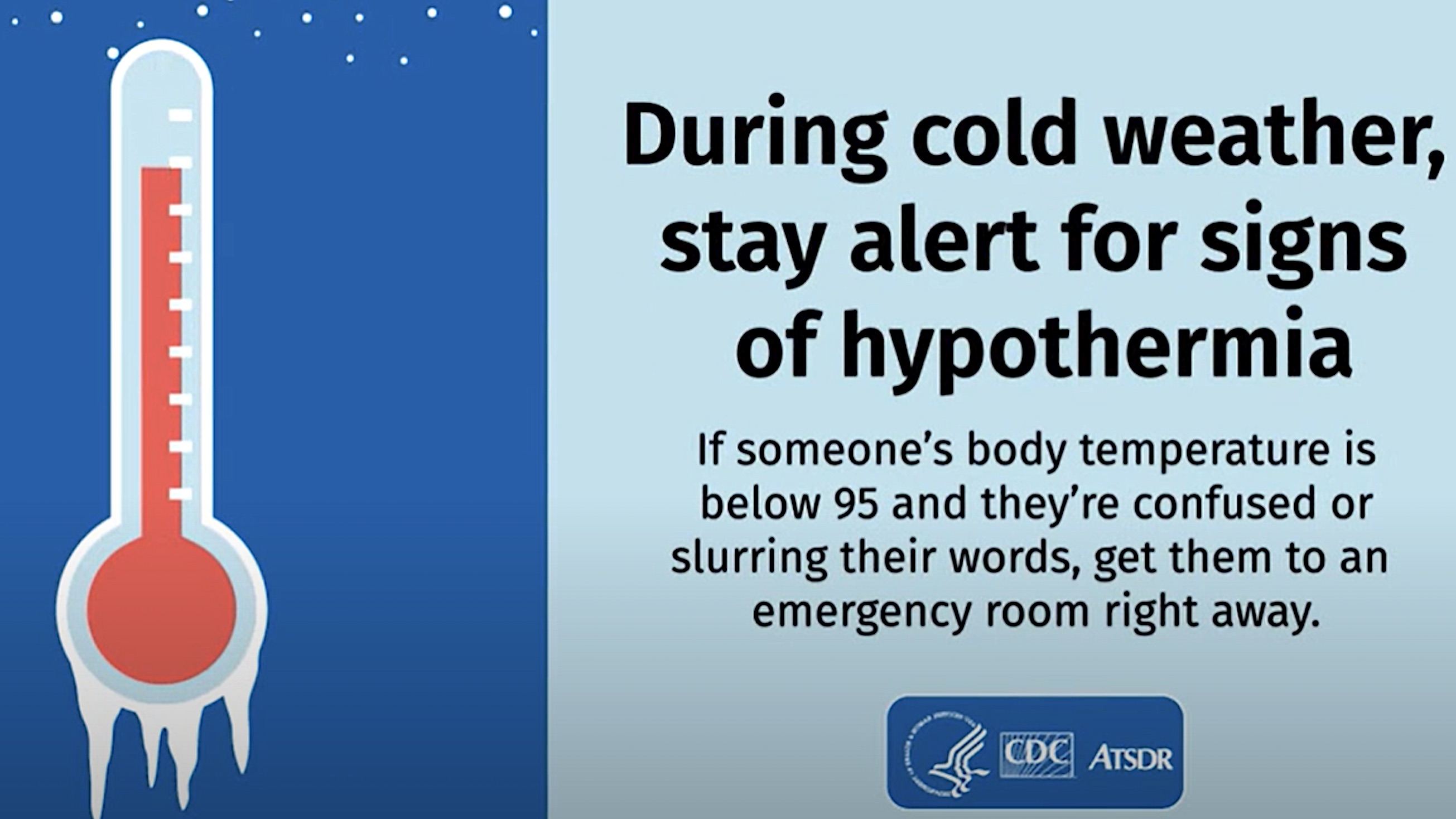
Learn to recognize symptoms of hypothermia, when exposure to cold temperatures make your body’s temperature drop dangerously low. Symptoms include uncontrolled shivering, slow or unclear speech, and feeling extremely tired. Very young and elderly people are at higher risk.
-
Prevent hypothermia
Prevent hypothermia by wearing multiple layers, seeking shelter, changing out of wet clothing, avoiding contact with metals, and protecting yourself from the wind. Heart disease, alcohol and drugs, exhaustion, and hunger can increase risk.
-
Treat hypothermia
Treat hypothermia by bringing the person indoors or to a dry place protected from the wind. Remove wet clothing and cover the person with dry blankets. Put them next to a warm (not hot) heater, and/or lie under the covers next to the person to transfer your own body heat. Wrap an infant inside your own clothing against your skin.
Severe windstorms
-
Avoid driving or walking
Avoid driving or walking outside and move indoors during a windstorm.
-
Stay away from windows and doors
Stay away from windows and doors to avoid flying branches, falling trees, and broken glass.
-
Move to a small interior room
Move to a small interior room, like a bathroom, closet or hallway. If you can, go to a basement or ground floor. For more protection, get under a sturdy table or desk.
General cold weather safety
-
Keep warm
If you don’t have enough heat, wear multiple layers, close curtains or blinds, and stay together in one room with the doors closed to capture body heat.
-
Keep walkways and sidewalks free of snow
Keep walkways and sidewalks free of snow and ice and wear shoes with extra traction to avoid falls. Shovel snow and use salt if you can.
-
If you lose cell phone service
If you lose cell phone service, use wi-fi calling on your phone or computer, or ask a neighbor with a different carrier for help. You can text 911—sometimes texts will still work when you can’t make a call. Please don't test your phone's SOS feature unless you have an emergency!
More resources
- Visit Ready.gov for resources and information, including a Family communication plan, Emergency supply list, and guides on how to prepare for disasters.
- You can also visit kingcounty.gov/preparedness to find emergency preparedness comics and many other resources in several languages.
- Remember to sign up for alerts at kingcounty.gov/alert