
 Translate
Roads and flooding in unincorporated King County
How we respond to severe weather and flooding
Before severe weather hits, King County Road Services works in partnership with many different agencies including the King County Office of Emergency Management, the King County Flood Control District, the Flood Warning System, first responders, and meteorologists to understand the storm and prepare our crews.
King County staff can shift into emergency response mode as storms hit the area. Field crew work shifts are changed from their normal daytime hours to two 12-hours shifts that allow for around the clock storm and safety response in unincorporated King County.
The 24/7 Road Helpline is staffed with additional customer service agents to perform call intake and faster deployment for the storm safety related incidents being reported. Communications teams monitor and report significant incidents such as road closures via the King County My Commute map. Road Alerts and X (Twitter) are used to relay information about unincorporated roadways affected by severe weather.
This page includes detailed information about how we respond.
Status update
You can help prevent local flooding by clearing leaves from storm drains on your property or next to your road. If your drain has a below-the-surface clog or if you see flooded roads, you can report them to our 24/7 Road Helpline at 206-477-8100. We also offer free sandbags to help safeguard your home from flood. View this video to learn more.
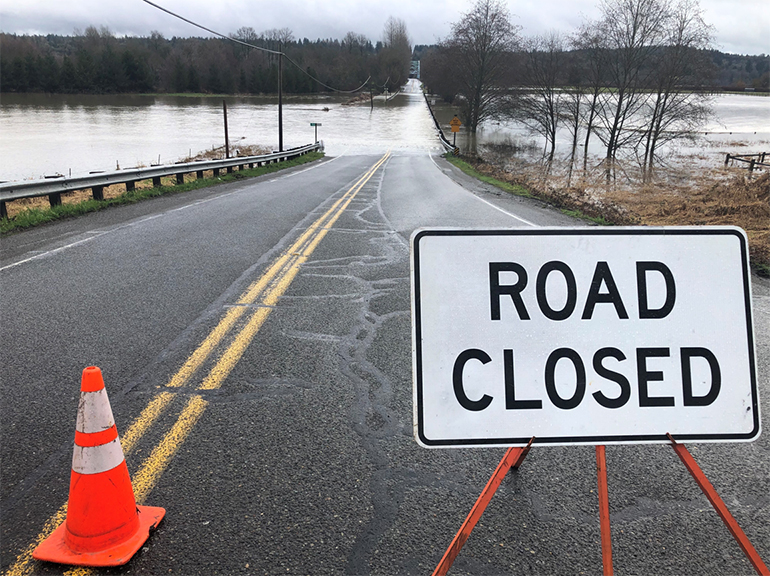
When it's wet out there, remember: Turn around, don’t drown. Driving through flooded roads is dangerous:
- Just 6 inches of water can make you lose control.
- 12 inches can carry your vehicle away.
- Floodwaters can hide washed-out roads and strong currents.
If you see a “Road Closed” sign, do not move it. Water is further down the road (even if you can’t see it). It’s not worth the risk. Stay safe and find another way!
Flood safety video
Sandbag distribution available free of charge
King County and several local jurisdictions provide sandbag materials to the public free of charge. Sandbag distribution information is available through King County Water and Land Services, Flood Services and is also recorded on the King County Flood Warning Information Line: 206-296-8200 or 800-945-9263.
Which roads are most prone to flooding in our service area and why?
The Snoqualmie Valley is most prone to flooding when heavy rain or snow melt occurs. This flooding causes roads to be closed – in some cases for long periods of time.
Many of the major roads in the Snoqualmie Valley were constructed in the nineteenth century. Roads were typically built adjacent to rivers and followed property lines. Many of these roads will always be vulnerable to flooding because of geography and the historical drainage patterns that existed long before these roads were constructed.
Raising roadways can cause the roads to act as natural dikes or dams that cause damage further upstream – ultimately the water needs to drain into Puget Sound. The solution to some of these problems is to build trestle bridges across the valleys - projects that would cost tens of millions of dollars.
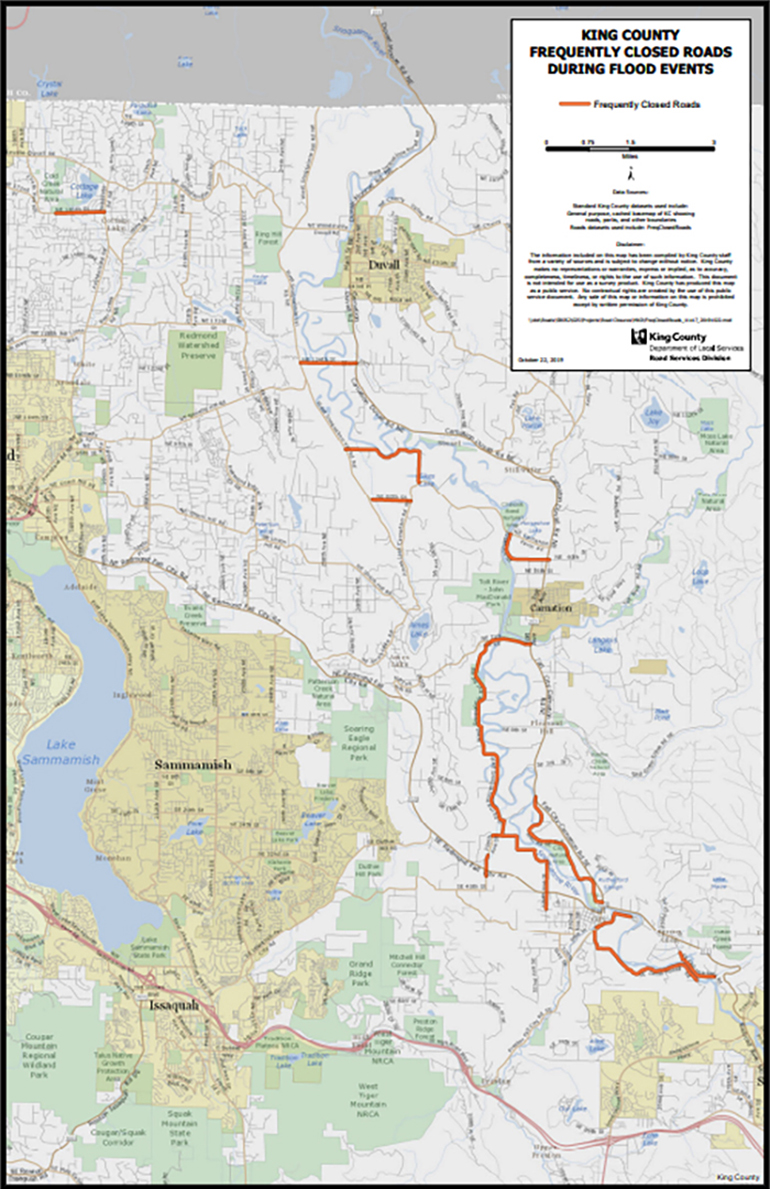
Larger view of map (7MB)
Flood information sites
The following websites provide additional information and news about flooding in King County:
Slide risks
When sloped areas become completely saturated by heavy rainfall, the risk of slides increases. While the likelihood of slides begins to decline after a day or more of dry weather, some deep-seated slides may occur days or even weeks to months after long periods of intense rainfall. Residents near mountain slopes, canyons, and slide prone areas should stay alert even after heavy rain subsides.
The King County Office of Emergency Management provides additional slide information including hazard-specific preparedness steps and response steps.