
 Translate
Waste's impact on climate
Discover how everyday consumption impacts the climate. Learn practical tips for reducing waste and making choices that cut greenhouse gas emissions.
How your stuff affects the climate
Our daily consumption decisions impact the climate. The products we buy, use, and toss out directly contribute to greenhouse gas emissions. Every step of the product’s lifecycle, from resource extraction and processing to transportation, use, and disposal, takes energy that releases emissions. How you handle waste – whether reusing, recycling, composting, or disposing as trash – also has consequences for the climate. Understanding this help us make more informed, sustainable choices.
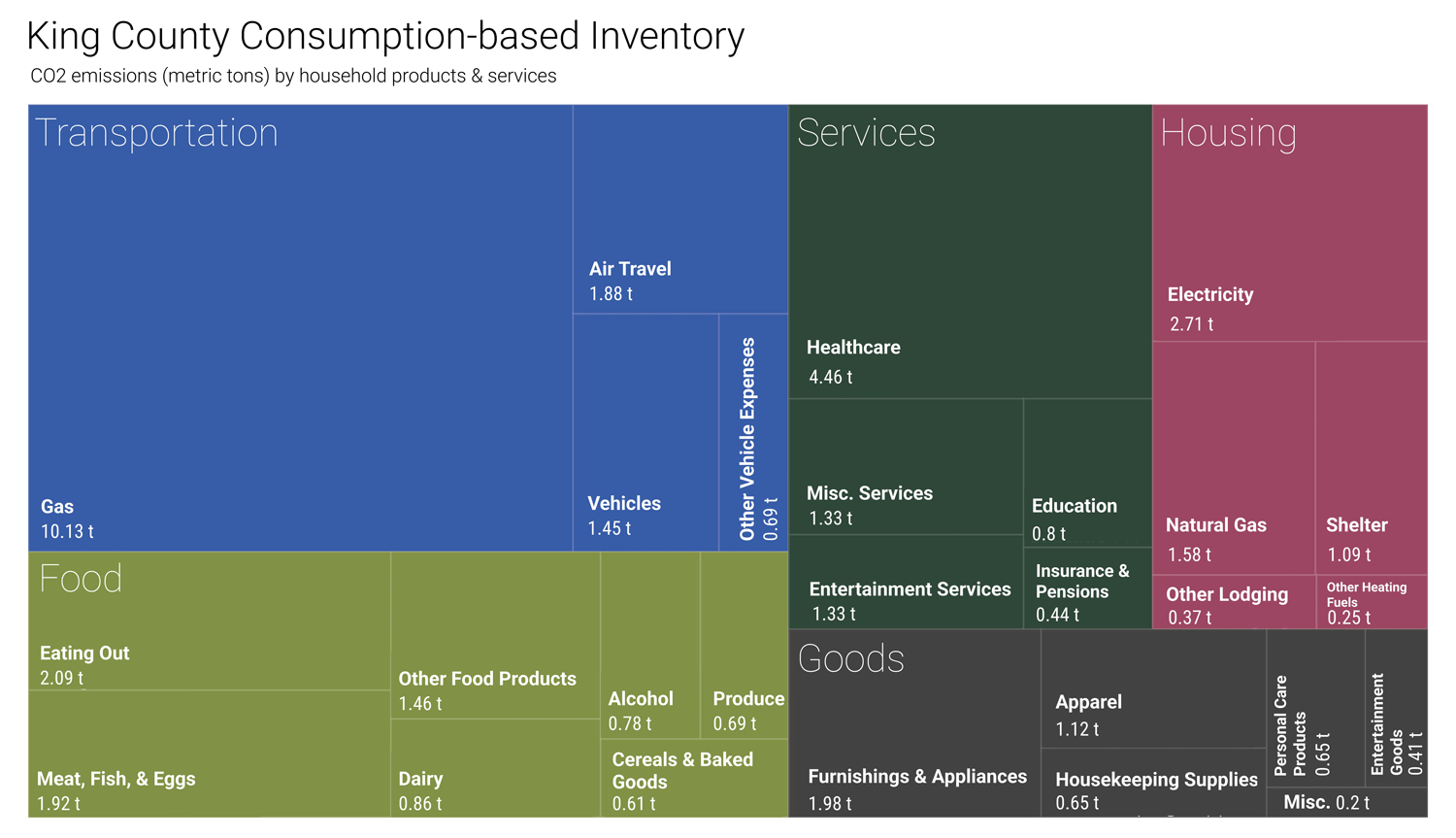
The graphic below shows emissions from the lifecycle of products and services used in King County. This includes resource extraction, processing, transportation, use and end of life.
King County’s approach to waste management
The King County Solid Waste Division owns and operates Cedar Hills Regional Landfill, the county’s only active landfill. Today almost 70 percent of the stuff sent to Cedar Hills could have been repurposed. Preventing 75% of that material from entering the waste stream would divert 450,000 tons from the landfill and eliminate approximately 600,000 metric tons of greenhouse gas emissions annually.
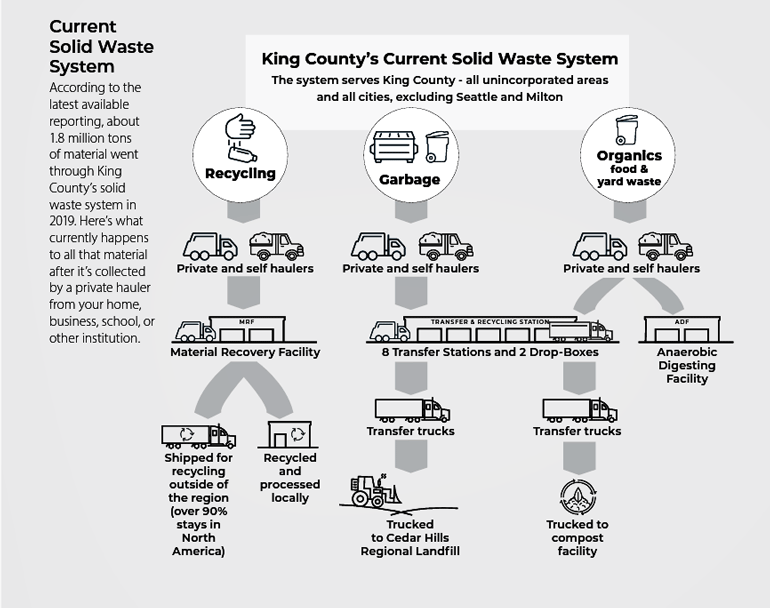
Through our Re+ Plan, we’re reinventing our regional system for waste management. Our goal is to minimize waste by keeping valuable materials in use and out of the landfill. Re+ supports local action to achieve climate goals outlined in King County's Strategic Climate Action Plan (SCAP) and the King County-Cities Climate Collaboration (K4C) agreements.
The power of recycling and reuse
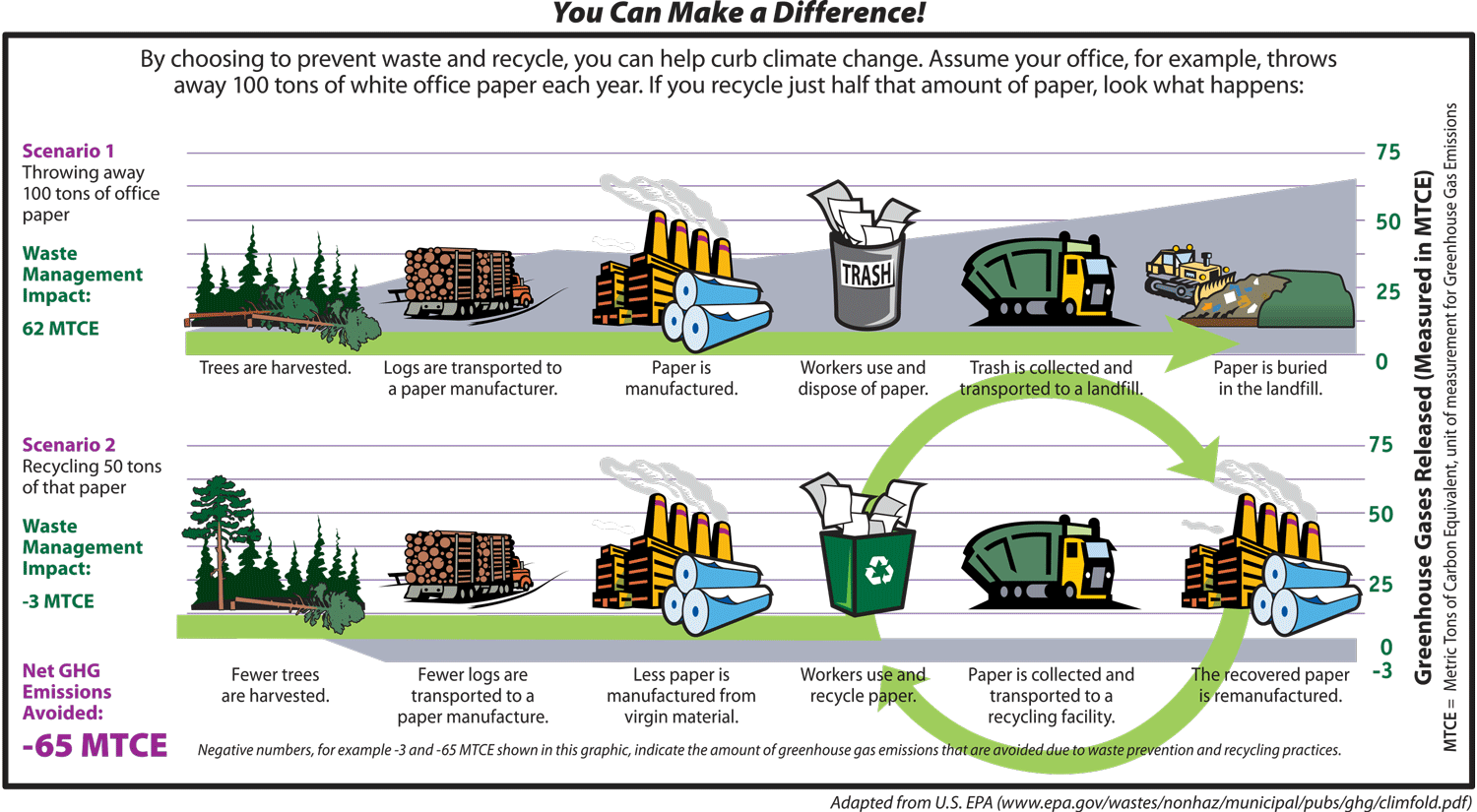
Recycling helps reduce greenhouse gas emissions and conserves energy. Making products from recycled materials decreases the need for new raw materials. This avoids the emissions from extracting and processing virgin resources and usually requires less energy. Practicing mindful shopping by buying less and reusing products reduces even more emissions and prevents waste.
The climate benefits of composting
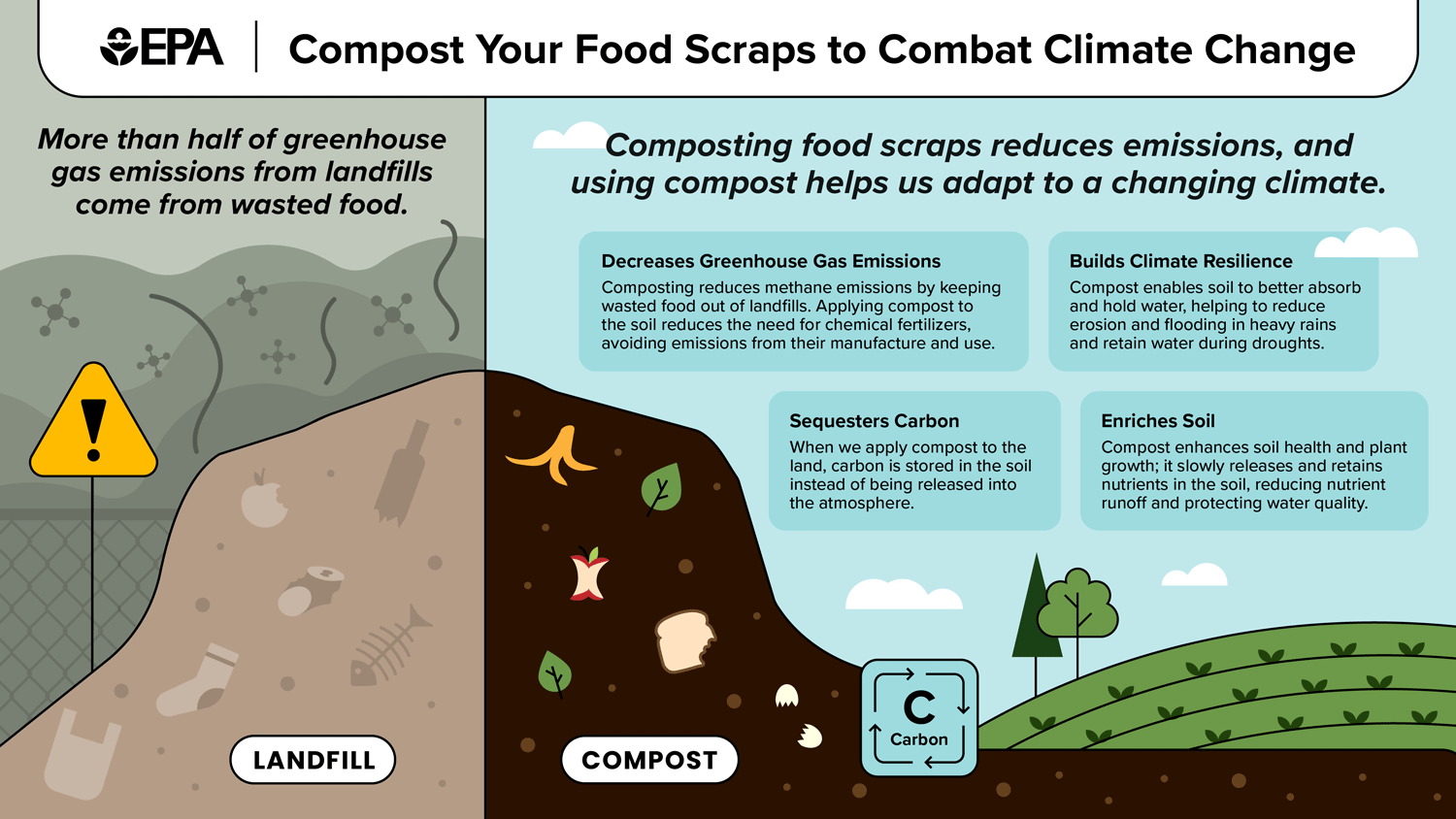
Composting transforms organic materials like food scraps, food-soiled paper, untreated wood, and yard waste into natural fertilizer. When we throw out these materials, they end up in the landfill and break down without oxygen. This process, known as anaerobic decomposition, creates methane, a powerful greenhouse gas. King County’s Cedar Hills Regional Landfill has a system that captures some methane, but it’s better to prevent its creation altogether. That’s where composting comes in.
In composting facilities, organic waste breaks down with oxygen in a process known as aerobic decomposition. This produces carbon dioxide rather than methane. Although both are greenhouse gases, methane traps 80 times more heat than carbon dioxide, making it more harmful to our climate.
Compost enriches soil, helping plants grow and absorb carbon dioxide. It also reduces the need for energy-intensive fertilizers and pesticides that are made from fossil-fuels.
Backyard composting
If you have a backyard, you can create your own compost from yard debris and food scraps. However, backyard composting set-ups don’t get as hot as commercial facilities and won’t break down materials like meat and bones. Visit our backyard composting page for more details.
Take action to reduce waste
Our everyday choices matter. Check out King County's Zero Waste Action Guide to incorporate simple strategies that make a big impact on protecting the environment.
Rethink. Evaluate your everyday choices to reduce your environmental impact. Explore these topics to learn how you can reduce waste:
- King County EcoConsumer: Tips for balancing consuming with conserving.
- Green building practices: Use green building practices in home construction or remodels.
- Natural yard care: Practice environmentally friendly landscaping.
- Composting: Compost your food scraps and yard trimmings to reduce landfill waste.
Reimagine. Do you have a business, idea, or project that could reduce waste in King County? Check out these funding opportunities:
- Re+ Circular Economy Grant Program: The Re+ Circular Economy Grants are an important part of King County's commitment to increase the prevention, reuse, and recycling of material so that we meet our zero waste of resources goal and reduce the impact of our consumption on the environment. In the first round of funding, 14 projects were awarded a total of $2.3 million.
- NextCycle Washington: This Accelerator Grant Program offers technical assistance and funding to businesses and projects focused on expanding waste prevention, repair, reuse, recycling, and composting in Washington State.
Reduce. Use fewer resources with these strategies:
- Smart shopping: Buy only what you need and opt for minimal packaging.
- Energy efficiency: Use energy-efficient appliances and light bulbs.
- Digital alternatives: Choose digital documents over paper.
- Attend repair events: Extend the life of your belongings by repairing and maintaining them.
- Prevent food waste: Prevent food waste with small, simple changes. Check out King County's Food: Too Good to Waste program for tips.
Reuse. Give unwanted items a new life.
- Shop secondhand: Visit thrift stores, garage sales, and online marketplaces for used goods.
- Donation: Give your unwanted items another life by donating them or using platforms like Craigslist or Freecycle.
Recycle. Recycling benefits the environment, saves resources, and creates green jobs. Use these resources to recycle more effectively:
- Collection services: Learn recycling best practices and find info on home collection services.
- What do I do with…? Find businesses in your area for donation, recycling, and disposal.
Reducing emissions with effective waste management
Effective waste management is key in mitigating climate change. Some methods are better than others for reducing greenhouse gas emissions. Composting and recycling have a smaller climate impact than landfilling and waste incineration.
Preparing for Climate Change
Climate change is a growing concern within King County communities and agencies. Since 1900, average annual air temperature in the Puget Sound region has increased 1.3 degrees Fahrenheit (°F). Heavy rain events are getting heavier, summers are getting hotter, snow and ice in the Cascades and Olympic mountains is declining long-term, sea level is rising, and ocean chemistry is changing in ways that are harmful to local marine species like shellfish and salmon. These changes are becoming increasingly visible in the form of more extreme weather events, higher King Tides, more poor air quality days from wildfire smoke, and less predictable snow cover for water supply and winter recreation, for example.
Reducing climate change vulnerability and building resilience is essential. As climate change intensifies, King County must strengthen its capacity to cope with hazards, respond to long-term shifts, and evolve in ways that ensure sustainability and equity.
King County Solid Waste Division developed a climate change vulnerability assessment and action strategy, that assessed climate change-related risks and potential impacts to systems and operations and identified priority actions to address those risks and impacts.