
 Translate
NE 128th Way Culvert (Fish Passage) Replacement Project
Construction began on August 17, 2026
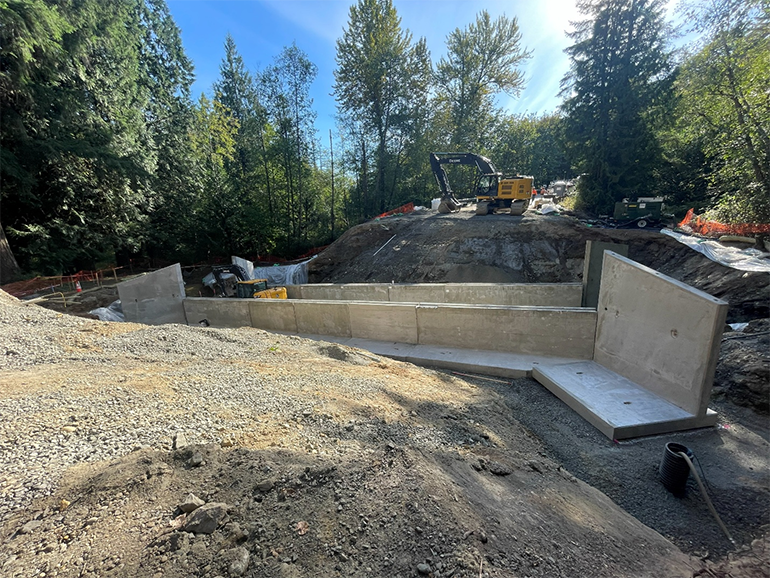
September 9, 2026: The sides of the new concrete box culvert have been installed.
Status update
September 25, 2026
Crews closed NE 128th Way, just west of Avondale Road NE on August 17, 2026, to complete a culvert replacement project.
During construction, crews identified additional drainage improvements needed near the project site. To minimize future disruptions, King County will complete this work while the road is already closed rather than returning later and requiring a second road closure.
As a result, the closure has been extended and NE 128th Way is now anticipated to reopen on October 30, 2026.
NE 128th Way remains closed to all vehicles, pedestrians, and people riding bicycles during construction. A signed detour route is in place.
This work may be delayed due to machine, crew, or equipment availability, or weather.
Please check this website and the King County MyCommute map. You can also sign up for Road Alerts to receive the most up-to-date project information via text and email notifications.
Project overview
King County is replacing an old, worn-out metal pipe under NE 128th Way near Avondale Road NE with a larger concrete box culvert. The metal pipe was rusted and old and could have collapsed. If this had happened, the force and volume of the water could have washed out the entire roadway completely, leading to a sudden, long-term road closure for emergency repairs. The culvert brings an unnamed tributary stream to Cottage Lake Creek.
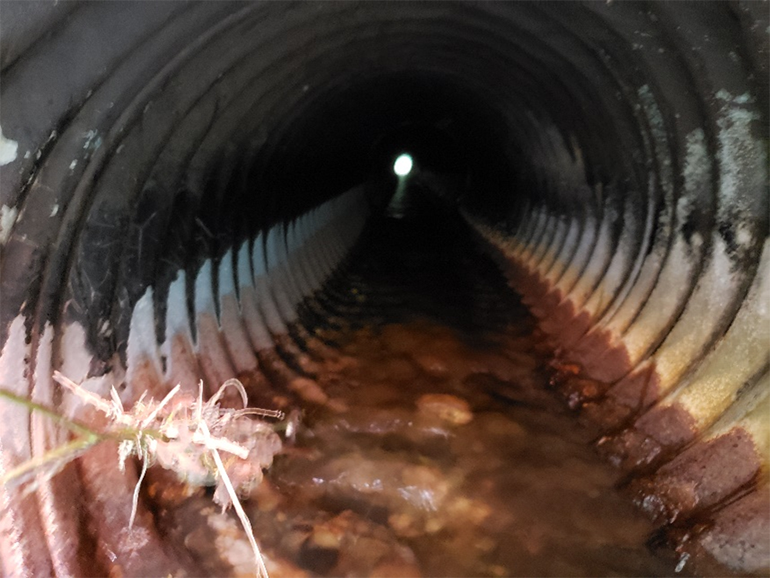
A closer look at the metal culvert that carries an unnamed tributary stream to Cottage Lake Creek under NE 128th Way. Rust had eaten away at the bottom of the pipe and it is time to be replaced.
The new box culvert will make it much easier for fish in Cottage Lake Creek to migrate to the Sammamish River. Designed to simulate a natural stream, the new culvert will maintain a consistent, gentle water flow under the road.
Crews anticipate the full 24/7 road closure to last up to 11 weeks. During this time, NE 128th Way is closed to all vehicles, including first responders, school buses, bicycles, and pedestrians. Full closure is needed due to the construction site being too narrow for a lane to remain open because a big construction crane and other large equipment will be blocking the road.
Project location map
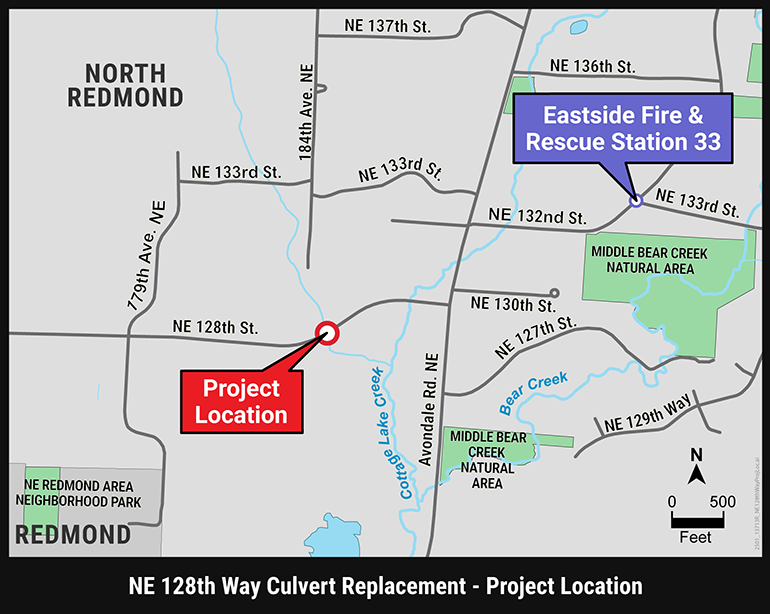
The NE 128th Way Culvert Replacement Project spans an unnamed tributary stream to Cottage Lake Creek. It is located near the intersection of Avondale Road NE in Cottage Lake, near Redmond, WA.
Why is King County replacing this culvert?
We are replacing the narrow metal culvert because it is too small, deteriorated, and is a fish passage barrier.
The new, wider concrete box culvert is designed to improve fish passage under the road. The current metal pipe is considered a fish passage barrier for two main reasons:
- It is too small to handle the stream’s water volume, causing fast-moving currents that make it nearly impossible for fish to swim through.
- At times, the water inside is too shallow in summer months, and the culvert sits too high above the stream bed, preventing fish from jumping in and continuing upstream.
Benefits of the concrete box culvert
The new concrete box culvert will make it much easier for fish in the unnamed tributary stream to Cottage Lake Creek to pass under the roadway and continue their migration to the Sammamish River. It is designed to simulate a natural stream and maintain a consistent, gentle water flow under the road.
The box culvert can accommodate a much larger volume of water.
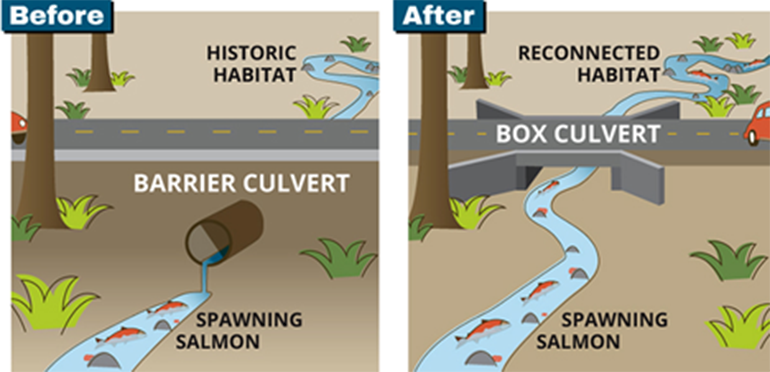
Fish have a hard time migrating upstream if there is not enough water in the culvert or if the culvert is perched too high above the stream. The new box culvert helps make it easier for fish to pass under the road. (Image courtesy of King County Fish Passage Restoration Program).
The following fish species are found in Cottage Lake Creek:
- chinook salmon
- sockeye salmon
- kokanee salmon
- coho salmon
- cutthroat trout
- steelhead trout
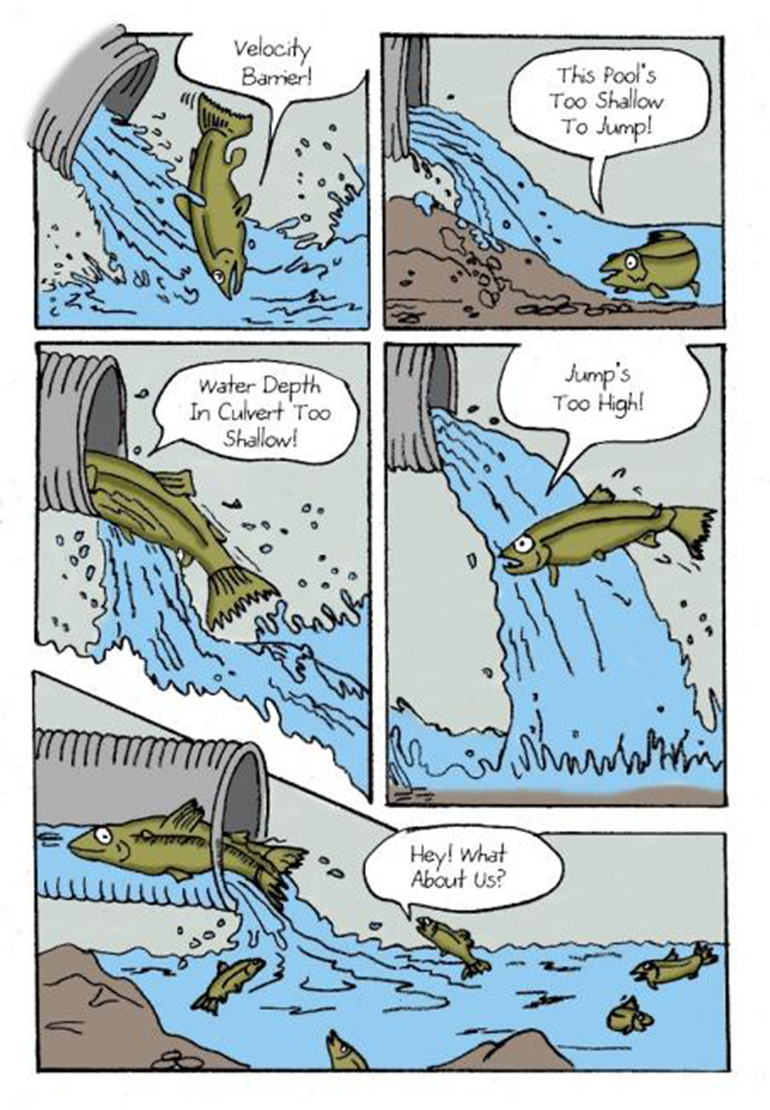
Culverts can block fish migration if the water flow is too swift, too shallow, or if there’s a waterfall entering or exiting the culvert. The new box culvert is designed to maintain a natural flow of water, simulating natural stream conditions. (Image courtesy of WSDOT Fish Passage Program).
What to expect during construction
NE 128th Way is closed for up to eight weeks during construction. The road is too narrow to have enough room for a large construction crane and other necessary equipment while safely keeping even a single lane of alternating traffic open through the work area.
During construction, crews will:
- Excavate a large pit in the road to remove the existing 18-inch diameter metal pipe.
- Prepare the ground for the installation of the new culvert. Using a large crane, crews will place the sides and lid of the new culvert in the ground.
- Create a streambed inside the culvert using natural materials to improve fish passage.
- Lower the lid of the culvert into place with a crane.
- Rebuild and pave the road.
The project team will take measures to protect trees near the creek and minimize dust and dirt caused by construction. However, people living near the work area might experience the following while the culvert is being removed and replaced:
- Noise and odor from saw cutting, jackhammers, excavators, generators and pumps.
- Increased truck traffic for hauling materials to and from the construction site.
- Large construction cranes operating in the roadway.
After the new culvert is opened to traffic, crews will continue low impact restoration work including plantings and site clean-up.
Detour route
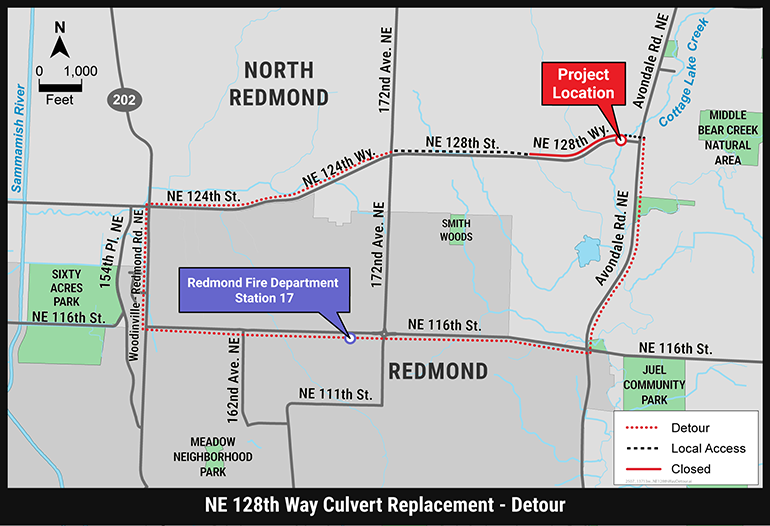
The detour route is just over five miles long. Vehicles, bicycles, and pedestrians will use State Route 202, NE 116th St, and Avondale Road NE while the road is closed for construction.
Budget and funding sources
The total cost estimate for the project is $1.76 million. This project is funded through the King County Department of Natural Resources and Parks Fish Passage Restoration Program, which is supported by local funding sources.
Project timeline
- Final project design: Spring 2026
- Construction start date: August 17, 2026
- Substantial construction complete: Fall 2026
Frequently asked questions
NE 128th Way is too narrow to have enough room for a large construction crane and other necessary equipment while safely keeping even a single lane of alternating traffic open through the work area. There are no shoulders to store equipment.
It will take approximately eight weeks to remove the old pipe and install the new box culvert under the road. Once the new culvert is installed, crews will reopen both lanes of NE 128th Way.
The eight-week full road closure also significantly reduces the total cost of the project.
The City of Redmond completed construction of their 172nd Ave NE Corridor Improvements Project in July 2026. The project included the installation of traffic circles, speed cushions, and other traffic calming features. The gate on 172nd Ave NE was removed as the final step of their project.
A fish passage barrier is any obstacle that prevents fish from moving upstream or downstream.
Most fish barriers in unincorporated King County are large round metal pipes (culverts) that direct streams and water beneath roads. Many of these culverts were installed 30 to 100 years ago. These older metal culverts allow water to flow, but they are often too narrow and steep, making it difficult for fish to swim through.
Culverts may block fish migration if the water flow is too swift, too shallow, or creates a waterfall at the entrance or exit.
This project is in the Bear Creek Basin of the larger Lake Washington/Cedar/Sammamish watershed that contains many miles of high-quality aquatic resources and is known to support a wide range of fish. Replacing this fish passage culvert will add to these valuable resources for aquatic life.
The ability of salmon and trout to swim upstream to their traditional spawning grounds is vital to their recovery across Washington and King County. Deteriorating culverts and other barriers block fish passage and undermine the state and county recovery efforts.
One of the most effective ways to ensure the survival of native fish – and the southern resident orcas that rely on them as a food source – is to remove barriers to their habitat.
The existing metal pipe culvert is rusted and old and must be replaced before it fails. If the pipe collapsed the force and volume of the water could cause the entire roadway to fail.
The State of Washington has categorized the stream as "fish-bearing" which means that the stream is currently inhabited by fish or has the potential to be inhabited by fish if certain barriers were removed or improved for passage. Because the stream is categorized with fish, the culvert must be replaced with a large concrete box culvert system that allows for their passage and survival. This is part of the county’s Fish Passage Restoration Program.
Photos
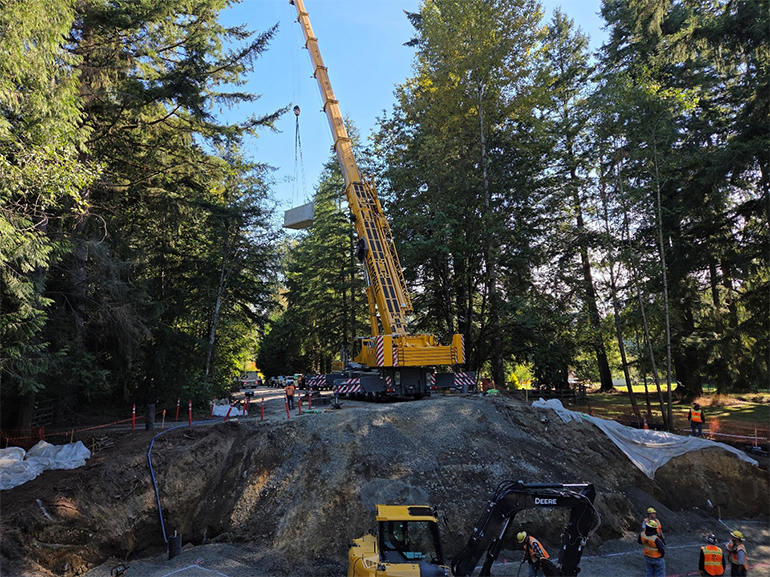
September 9, 2026: The sides of the box culvert are carefully being moved into place with the help of a crane.

September 3, 2026: Using a excavator, crews scraped away the earth to make space for the foundation of the box culvert. Plastic sheets were temporarily added to protect the area from rain.
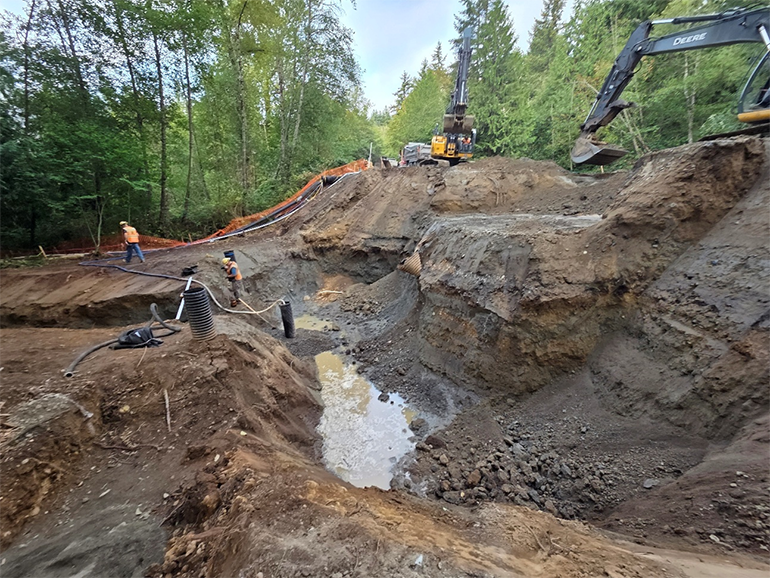
September 1, 2026: Site excavation is underway to prepare the foundation of the site for box culvert installation.
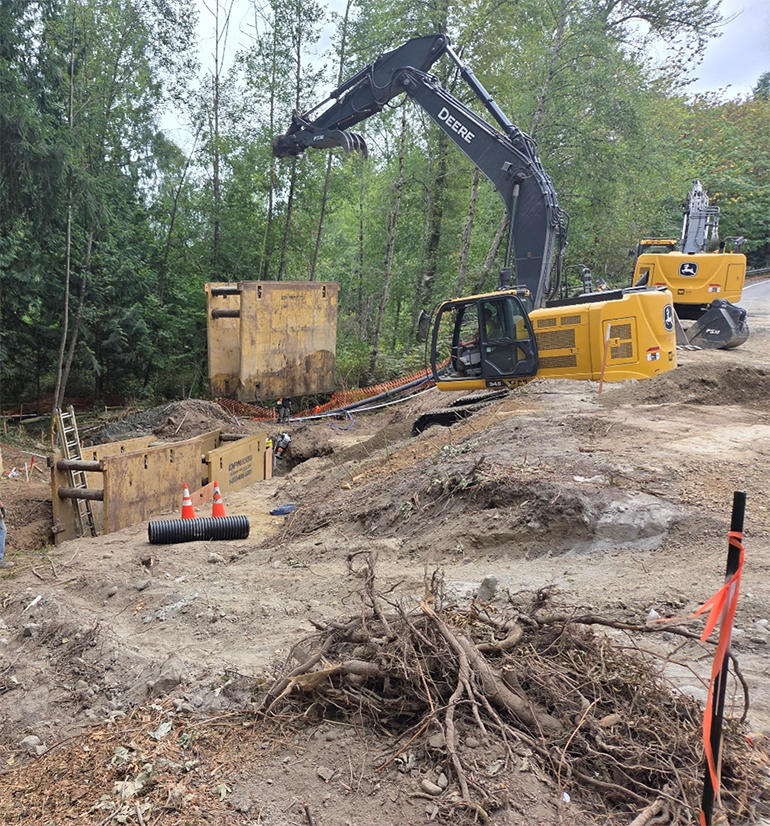
August 27, 2026: A trench box was installed, which will be used later in the project to relocate the waterline.
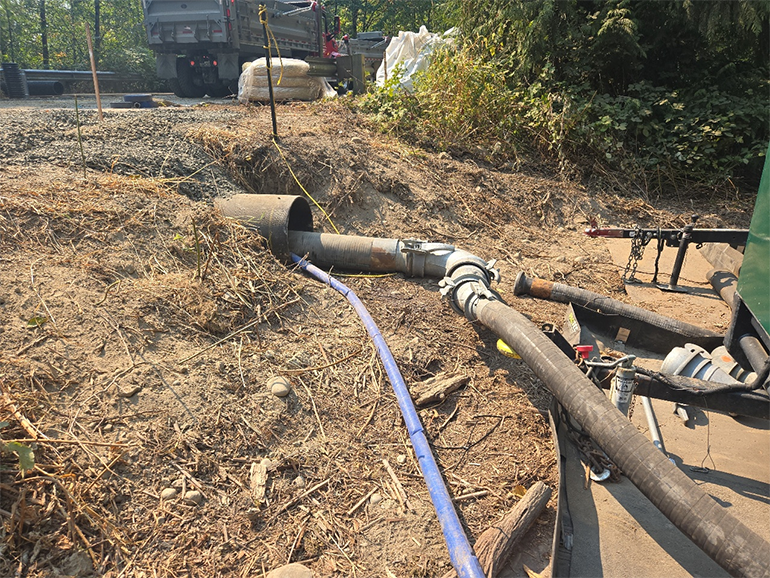
August 25, 2026: Crews have installed pipes to divert the stream, so the work area remains dry.
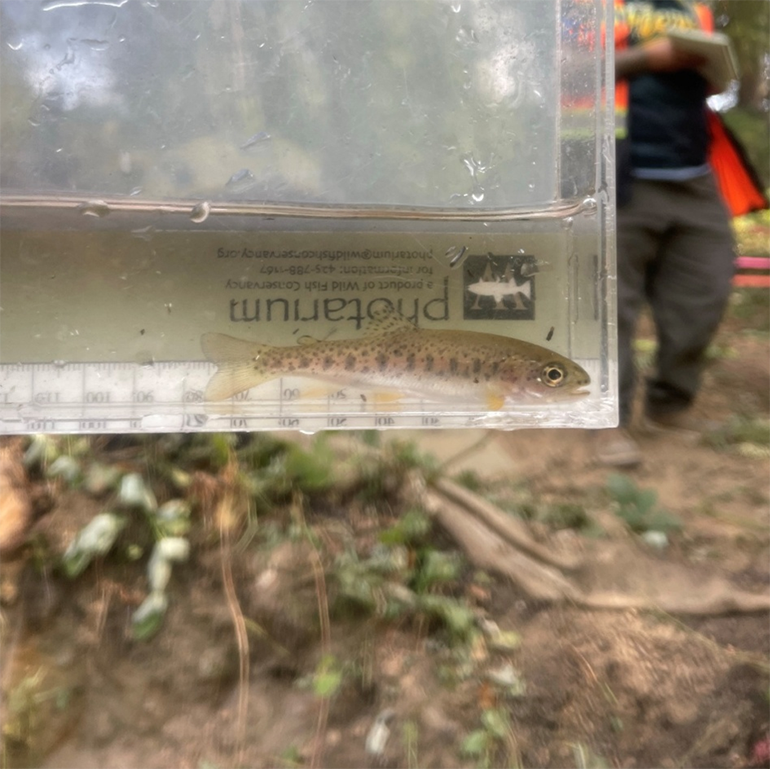
August 21, 2026: This small cutthroat trout is one of several salmonids found during the fish exclusion process. During this work, environmental teams temporarily divert the stream to create a dry area for construction. As part of the process, they collect any aquatic species and relocate them safely downstream.
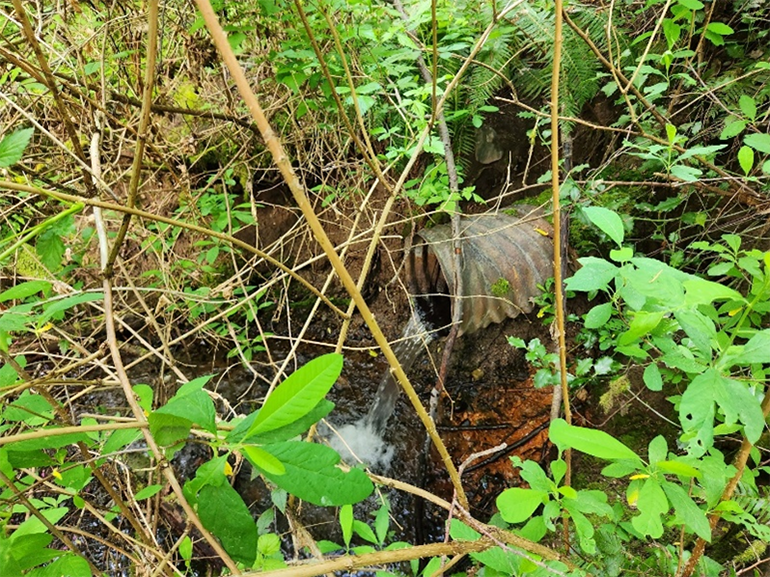
The previous metal pipe culvert outfall was too high (perched) above the stream bed for salmon and other fish to pass through.