
 Translate
Fish and shellfish in King County
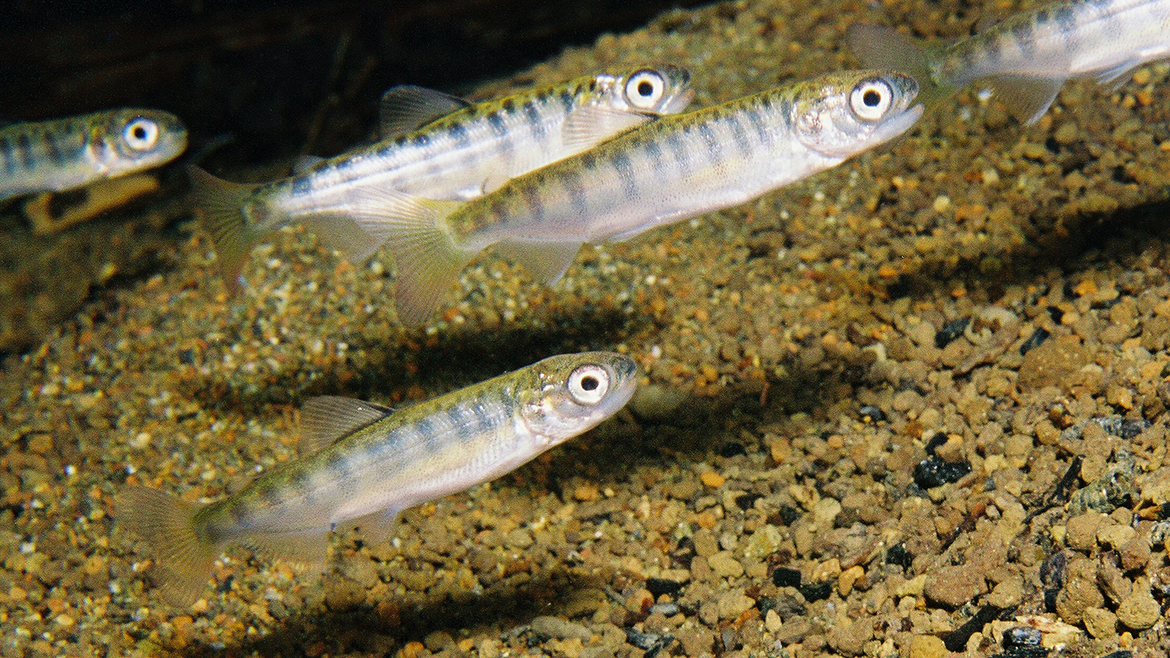
Salmon and trout
Salmon and trout identification
Learn how to distinguish fish species in King County streams from their shape, color and markings.
Where to view salmon
Check the Salmon Seeson interactive map of King County to see salmon runs in streams during the fall and winter.
Salmon conservation and recovery
Learn what King County and partner agencies are doing to protect and restore threatened salmon in King County's watersheds including Cedar River/Lake Washington, Snoqualmie/Skykomish, Green/Duwamish and White River watersheds.
Lake Sammamish kokanee recovery
Learn how King County is helping restore the health and vitality of Lake Sammamish kokanee populations that spawn in the creeks that flow into the lake.
Fish Passage Restoration Program
Learn how King County is working to open up miles of good spawning habitat to anadromous fish by removing barriers to migration.
Stream health is improving throughout King County
Learn how stream health is improving over the past few decades. View videos and maps and read the scientific findings.
The Restore and Protect Project
Identifying and recommending actions to restore and protect local streams in the Puget Sound basin.
Chemicals of emerging concern
Project to identify chemicals of emerging concern (CECs) such as PFAS and 6PPD-quinone and quantify their concentrations in salmon streams with critical spawning and rearing habitat.
Shellfish
Invertebrates
Learn about unique mollusks found in the cleanest streams and rivers having cool, clear water.